
Last updated October 16, 2026
 Wrought iron
 Wood & steel frame
 Farm & ranch
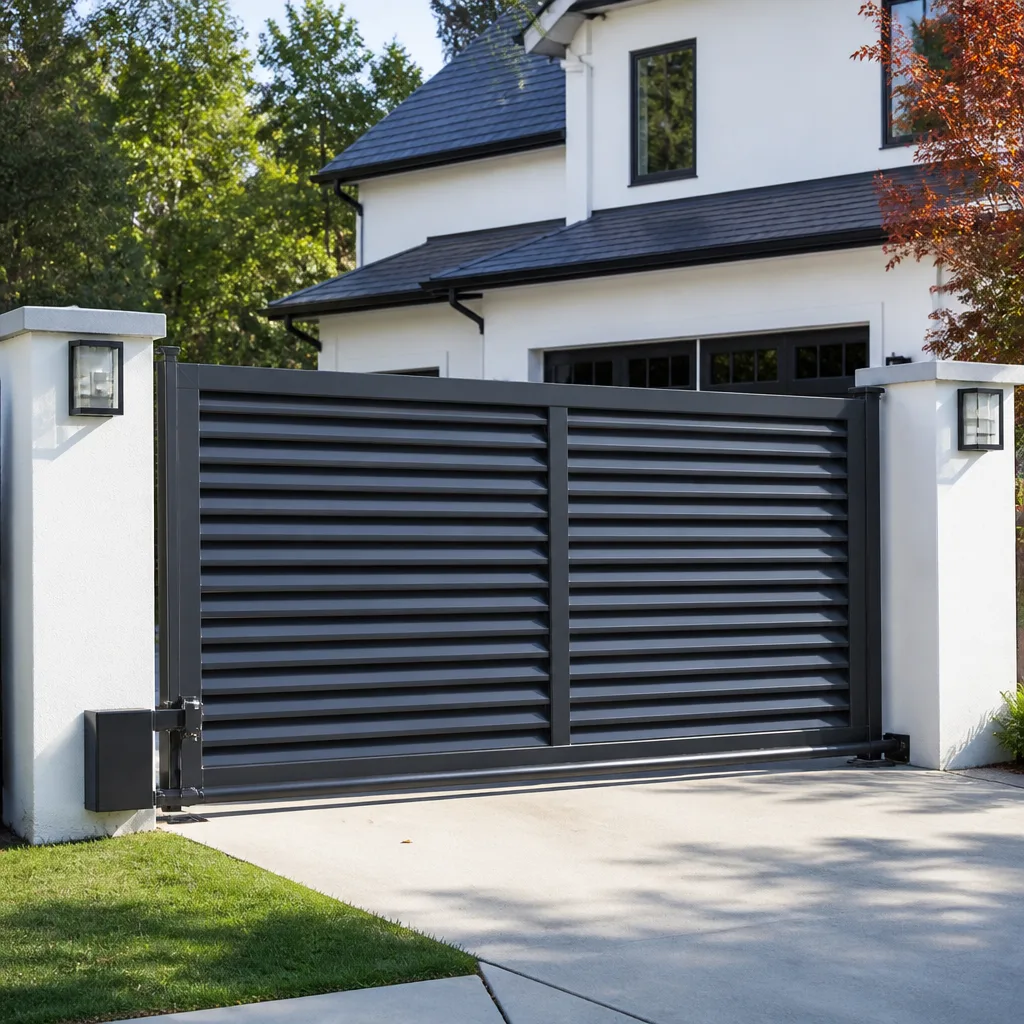 Sliding driveway gates
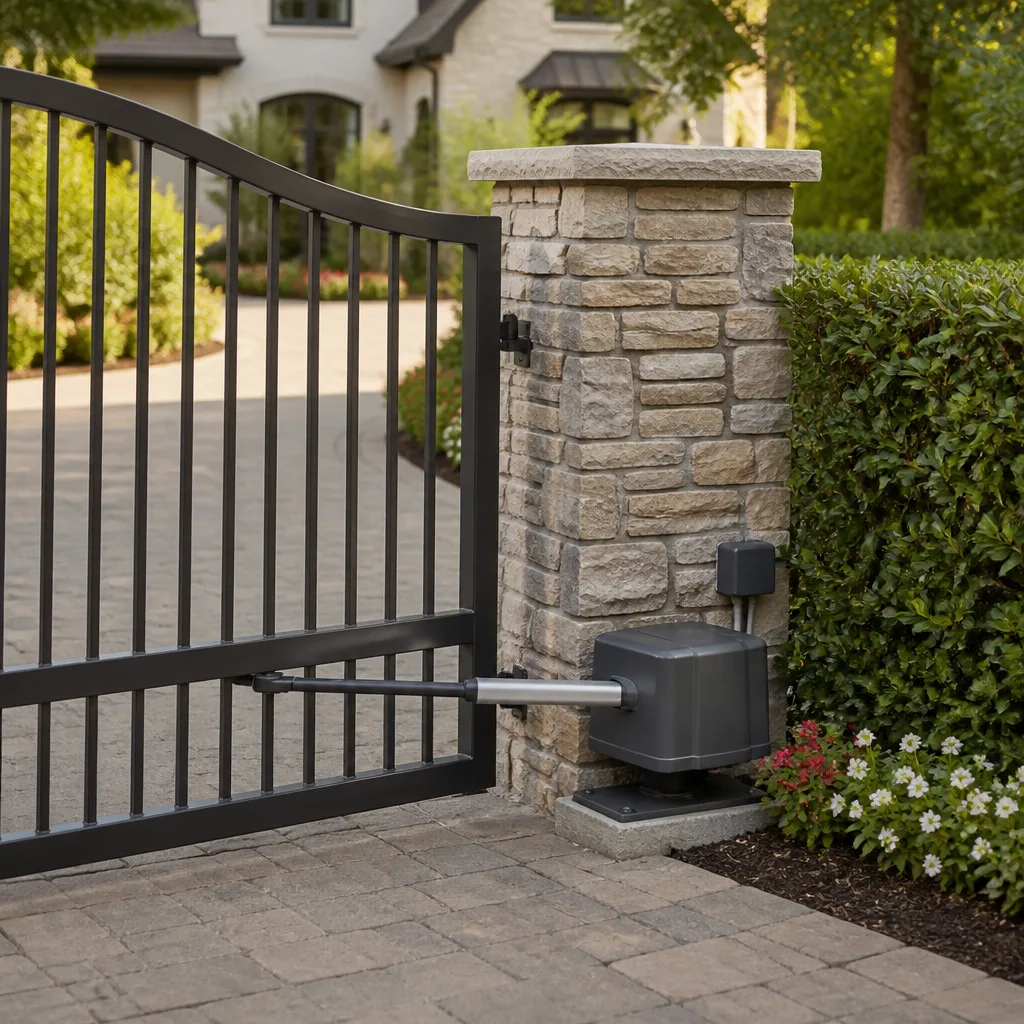 LiftMaster operators
Free on-site gate assessment - hinges, posts, and your LiftMaster or Nice gate operator checked before anything is quoted
The assessment is free and the quote is the invoice.
Get your free estimateGate Repair Maintenance Checklist for Las Vegas Homeowners
Most gate maintenance checklists were written for four-season climates. Las Vegas has one brutal season that runs nine months, and the checklist you’re probably using was not written for it. The desert does three things to an automatic gate that no other climate does at the same time: it bakes the electronics inside steel housings that hit 140°F by June, it drives fine caliche dust into every hinge and sensor, and it starves the metal of the moisture that keeps protective oxide layers stable in other regions. This guide is a Las Vegas-specific maintenance checklist built around those three forces. By the end, you’ll know exactly what to inspect, what to lubricate, what to leave alone, and when a maintenance issue has crossed into our Gate Repair services territory. We’ve serviced gates across Las Vegas since 2008, and the failures we see follow predictable patterns that this checklist addresses directly.
Styles & brands we work with
Quick Answer
A Las Vegas gate maintenance checklist should be performed four times a year, with two of those checks timed for late May and late September to bracket the extreme heat season. The most important tasks are inspecting hinges for heat-stress cracks, lubricating with silicone spray (not lithium grease) to avoid caliche dust buildup, testing safety sensor loops after every major dust storm, and replacing the gate motor backup battery every 18 to 24 months instead of the manufacturer-stated 3 to 5 years because desert heat degrades sealed lead-acid and AGM batteries roughly twice as fast.
Table of Contents
- Why Las Vegas Demands a Different Gate Maintenance Schedule
- The 15-Minute Photo-Based Inspection Method
- Lubrication in the Desert: Silicone vs. Lithium Grease and Why It Matters at 110°F
- Gate Motor Battery Backup: Why the Manufacturer Schedule Is Wrong for Las Vegas
- Testing Safety Loop Sensors After a Dust Storm
- What Nevada Code Says Homeowners Can Do Themselves
- The Seasonal Las Vegas Gate Maintenance Checklist
- Common Mistakes to Avoid
- When to Call a Professional
- Frequently Asked Questions
- The Bottom Line
Why Las Vegas Demands a Different Gate Maintenance Schedule
A gate installed in Las Vegas lives through conditions that would be considered test-chamber abuse for a gate in Portland or Atlanta. Summer surface temperatures on dark metal gates regularly exceed 130°F before noon. Air temperatures in July average over 100°F for weeks straight, but the gate itself soaks up direct sunlight and becomes dramatically hotter than the air. That heat does two things: it accelerates the evaporation of any petroleum-based lubricant, and it forces the control board inside the gate motor housing to run hot for six months out of the year. Electronics that operate at 40°C above their rated ambient temperature fail earlier, and we see those failures in Las Vegas on a predictable timeline.
Then there’s the dust. What locals call caliche is fine, alkaline, high-mineral dust that gets airborne during the afternoon wind patterns that roll through the valley. That dust does not just settle on surfaces, it works its way into moving parts, combines with whatever lubricant is present, and forms an abrasive paste. A gate that gets the standard advice of “lubricate the hinges twice a year with white lithium grease” will develop a grinding, cement-like buildup in the hinge barrels within eighteen months in this climate. The maintenance schedule that works in a humid or four-season climate doubles the right intervals for lubricant application but uses the wrong product entirely for Las Vegas conditions.
Near-zero humidity has one more effect most people don’t think about: it changes how coatings and metals age. Steel and iron gates in Las Vegas don’t rust the same way they do in coastal or humid cities, but the paint and powder coating on them fails from UV embrittlement first. Once the coating cracks, the dry air and alkaline dust attack the bare metal underneath, and you get a pitting corrosion pattern that looks different from familiar red rust. Homeowners who have never dealt with desert metal fatigue miss these early signs because they’re looking for the wrong symptom.
We’ve built our Gate Repair in Las Vegas service around these local failure patterns, not the generic maintenance calendar. The checklist below reflects what actually kills gates in this valley.
The 15-Minute Photo-Based Inspection Method
Homeowners don’t need a torque wrench or a multimeter to catch the earliest signs of gate failure. What you need is a phone camera and fifteen minutes, done once a quarter. The photo-based method works because structural fatigue in gates is gradual, and human memory is not. If you photograph the same six points on your gate every season, you can compare and spot changes that would otherwise be invisible in daily use. This is the same discipline pilots use for pre-flight inspections, and it catches hinge stress fractures before they become post replacements.
Here’s the method, step by step:
- Photograph the top hinge barrel on the gate leaf, as close as your focus allows. Look for hairline cracks radiating out from the pin. In Las Vegas, the repeated expansion and contraction from day-to-night temperature swings of 40 degrees or more slowly fatigues cast hinge caps. The crack usually starts as a pencil-thin line at the bottom edge of the barrel.
- Photograph the bottom hinge bracket where it meets the post. Look for a gap forming between the bracket and the post face, or for powder coating that has lifted and flaked in a line. A widening gap is the earliest sign the hinge is pulling away from the post, which in Las Vegas usually means the post footing has shifted in the dry, expansive soil.
- Photograph the gate’s lowest corner, especially on a sliding gate. Look for a polished or worn strip on the bottom guide wheel, and for accumulated dust caked on the track. The dust wedge that builds up on a sliding gate track in Las Vegas can add enough resistance to overload the gate motor over months.
- Photograph the gate motor housing from above. Look for a fine dust layer on top and behind the cover. If the dust layer is thick, the motor’s cooling vents are partially plugged, and the control board is running hotter than it should. Desert heat plus a dust blanket equals premature motor failure.
- Photograph each hinge pin from above. Look for the position of the pin relative to the barrel. If one pin sits higher or lower than its pair, that hinge has worn asymmetrically and the gate is hanging slightly out of level.
- Photograph the gap between the two gate leaves when closed (swing gates) or between the gate and the stop post (sliding gates). This gap should be consistent top to bottom. If it narrows at the top, the gate is sagging. Sagging is the root cause of most hinge failures and gate motor overloads.
Save photos to an album named “Gate Inspection” so you can compare side by side. When you see a change from one quarter to the next, you’ve caught the problem at the maintenance stage, not the repair stage. If you find something during this routine and you’re not sure what you’re looking at, our Electric Gate Repair in Las Vegas team will look at your photos by phone and tell you whether it warrants a service visit.
Lubrication in the Desert: Silicone vs. Lithium Grease and Why It Matters at 110°F
The single most common mistake we see in Las Vegas gate maintenance is the wrong lubricant choice. The standard homeowner advice, repeated on gate websites and hardware-store aisles across the country, is white lithium grease for hinges. In Las Vegas, white lithium grease is a dust magnet that turns into grinding compound inside hinge barrels. Here’s what actually works and why.
White lithium grease is a thick petroleum-based grease that stays in place well, which is why it’s recommended in most climates. But it stays greasy in the heat, and greasy surfaces in a desert collect caliche dust. Within weeks, that dust combines with the grease into an abrasive paste. We’ve pulled hinge pins out of Las Vegas gates that were coated in a gritty, chalky cement of lithium grease and dust, and the damage inside the barrel looks like sandpaper was run through it. The product that works beautifully in Seattle or Atlanta actively damages gates in Las Vegas.
Silicone spray, specifically a dry-film silicone with PTFE, is the right choice for Las Vegas gate hinges and rollers. Silicone does not attract dust the way grease does, and a dry-film formulation leaves a thin lubricating layer that nothing sticks to. It also survives the 130°F surface temperatures of a Las Vegas gate in July without thinning and running off. Reapply it every quarter, which is more often than the twice-a-year schedule other guides recommend, because the heat and UV break down the carrier faster here.
For the gate motor drive components on sliding gates, use a graphite-based dry lubricant on the rack and pinion gear teeth. Never use grease on a rack. Grease on the rack catches dust and sand, and the gear teeth grind it into the metal. Graphite lubricates without leaving a sticky film, and it’s what the factory service manuals for DoorKing and Elite sliding gate operators specify for high-dust environments.
Here’s the full Las Vegas-appropriate lubrication list:
- Hinge pins and barrels: Dry-film silicone spray with PTFE, quarterly.
- Rack and pinion gear teeth (sliding gates): Graphite dry lubricant, quarterly.
- Gate wheels, rollers, and guide rollers: Dry-film silicone or graphite, quarterly, and clean the roller surface with a dry rag before applying.
- Keypad buttons and key cylinders: Light graphite powder only. Never oil or liquid lubricant, which pulls dust into the mechanism.
- Gate motor hinges or bracket pivots: A single drop of light machine oil, wiped dry after application, every six months.
- Do not lubricate: Magnetic locks, solenoid release mechanisms, safety loop sensor wires, or ball bearing races. These are sealed or electrically sensitive.
For anyone working with a Gate Motor Repair in Las Vegas professional, ask them to include a lubrication pass during any service visit. It’s a five-minute addition that extends hinge life by years in this climate.
Gate Motor Battery Backup: Why the Manufacturer Schedule Is Wrong for Las Vegas
Most gate motor manufacturers publish a battery replacement interval of three to five years for their backup batteries. That spec is written for a 25°C average ambient temperature. A gate motor housing in Las Vegas in July runs at 40°C to 50°C, and sealed lead-acid battery life has a roughly inverse relationship with temperature: every 10°C increase in sustained operating temperature cuts battery life roughly in half. That means a battery rated for four years of service life at room temperature lasts roughly two years inside a Las Vegas gate motor housing, and sometimes less if the housing is dark-painted and in full sun.
We’ve seen backup batteries in Las Vegas gates that test at zero usable capacity within 18 months of installation. When the power goes out, the gate doesn’t open, and the owner didn’t know there was a problem until the battery was dead and the gate was locked. Here’s the maintenance schedule we recommend for Las Vegas homeowners:
- Test the backup battery every three months. With the gate in the closed position, trip the breaker that supplies power to the gate circuit. The gate should open and close at reduced speed on battery power. If it won’t open, or if it opens slowly and then stops before closing, the battery is nearing end of life.
- Replace the backup battery every 18 to 24 months in Las Vegas, regardless of what the manufacturer manual says. The battery costs far less than an emergency service call when the gate fails during a power outage.
- Note the battery install date on a label inside the motor housing cover. This is the simplest maintenance habit we can teach. A Sharpie and a strip of painter’s tape take ten seconds, and they prevent guessing.
- If you have a Viking or Ghost Controls gate motor with a solar-powered battery backup, check the battery every 12 months. These units sit in direct sun for maximum solar gain, which also means maximum heat load on the battery. Solar installs in Las Vegas need the shortest battery replacement interval of all.
Replacing a gate backup battery is a simple DIY task if you’re comfortable matching the battery type and specifications. We recommend disconnecting the AC power first, and never working inside the motor housing with the breaker live.
Testing Safety Loop Sensors After a Dust Storm
Las Vegas gets real dust storms. When winds push through the valley at 40 miles an hour, everything outside gets coated in a fine, alkaline dust layer that sticks to vehicles, windows, and gate components. Your gate’s safety loop sensors are the most dust-sensitive parts on the entire system. A safety loop is an embedded wire that creates a magnetic field in the driveway, and when a vehicle enters the field, the loop tells the gate motor to hold the gate open or reverse. Dust doesn’t damage the loop itself, but dust storms in Las Vegas bring two problems: they coat the photoelectric safety beam sensors that work alongside the loops, and they can shift accumulated slit or debris against the sensor housings.
The one symptom that signals loop failure before a full outage is a slow reversal. When a gate begins to close and a vehicle is detected on the loop, the gate should reverse direction within one second. If the gate pauses, slows down, or only reverses after a visible delay, the loop’s signal strength is degrading. That’s the early warning that the loop wire is failing, and it always happens before the loop stops sensing entirely. Here’s how to test after every major dust event:
- Clean the photoelectric safety beam housings with a dry cloth. These are the small box-shaped sensors mounted low on either side of the gate opening. Dust on the lenses blocks the beam, and a blocked beam can make the gate refuse to close, or refuse to open, depending on the controller configuration.
- Walk through the gate path as it begins to close. The gate should reverse immediately. If it hesitates, check for dust on the beam lenses first, then test again. If the hesitation remains, the issue is the loop sensor.
- Drive a vehicle slowly onto the driveway loop and have someone press the close command. The gate should not close while the vehicle is on the loop. If it does, the loop has lost sensitivity and needs professional attention.
- Check the loop sensor indicator light on the gate motor control board. Most boards have an LED that lights when the loop detects a vehicle. With no vehicle present, the LED should be off. If it flickers or stays on, dust or moisture has interrupted the loop circuit.
If any of these tests show slow reversal or a flickering loop LED, the loop needs professional diagnosis. A failed safety loop in Las Vegas is a safety issue and a garage-level convenience problem; modern gate motors will refuse to operate normally with a faulty loop as a built-in safety default. This is a common call we handle through our Electric Gate Repair in Las Vegas service, and it’s usually repairable without full loop replacement if caught at the slow-reversal stage.
What Nevada Code Says Homeowners Can Do Themselves
Nevada law and Clark County code draw a line between what a homeowner can legally perform on their own gate and what requires a licensed contractor. The distinction matters, not just for compliance but for safety. Gate motor voltage, fence setbacks, and safety sensor requirements are all covered by local code, and violations can create liability for the homeowner if a gate injury or property damage occurs.
Here’s the breakdown for Las Vegas homeowners, according to Nevada Revised Statutes and Clark County enforcement practice:
- Homeowners can legally perform: Lubrication of hinges and rollers, cleaning of tracks and sensor lenses, backup battery replacement, keypad battery replacement, inspection of hinges and posts, and tightening of visible fasteners. These are maintenance tasks, not code-triggering work.
- Homeowners should not perform: Any electrical work on the gate motor circuit, including wiring a new outlet to power the gate. Under Nevada Administrative Code, electrical work requires a licensed electrical contractor unless the homeowner holds a specific exemption and pulls a permit for a primary residence. Gate motor circuits are low-voltage on the operator side but the supply side is line voltage, and the code does not care about your confidence level.
- Homeowners cannot legally perform: Installation of a new safety loop in the driveway. Installing a loop requires saw-cutting the pavement, placing the wire at the correct depth and configuration, and sealing the cut. Nevada code treats this as a structural and electrical modification, and most municipalities require a licensed contractor with the appropriate C-10 or specialty classification.
- Homeowners cannot legally perform: Any gas-line, high-voltage, or structural post replacement work associated with gate repair. If a gate post has shifted and needs re-setting in new concrete, that’s a structural task requiring a licensed contractor in Clark County.
The pattern is simple: lubrication, inspection, battery swaps, and cleaning are yours to do. Anything involving line voltage, pavement cutting, structural repairs, or new installations is not a maintenance task, and Nevada code recognizes that. This is where Warden Gate Repair Las Vegas gets involved, and every job starts with a written price before any work begins so there’s no ambiguity about what the work costs. For more guidance, see our Gate Repair Permits, Codes & Inspections in NV: What You Need to Know.
The Seasonal Las Vegas Gate Maintenance Checklist
Las Vegas doesn’t have four seasons in the traditional sense, but it has three maintenance-relevant periods: pre-heat, peak heat, and post-heat. The biggest gate-killers each follow a specific calendar:
Pre-heat (Late May to early June): The first 100°F days test every connection, every lubricant, and every electronic component. This is the most important maintenance window of the year in Las Vegas. Before the first heat wave:
- Perform the full 15-minute photo inspection described above.
- Apply silicone spray to all hinges and rollers, and graphite to rack and pinion gears.
- Clean all sensor lenses and the gate motor housing vents.
- Test the backup battery function.
- Check that the gate stops on its own when it hits an obstruction. This is a safety test, not a convenience check.
Peak heat (July through September): During the hottest months, the maintenance task shifts from inspection to observation. Heat-related failures happen in real time:
- Watch for a gate that runs normally in the morning but slows down by 2 p.m. Thermal expansion changes clearances, and a gate that binds in the heat has a clearance problem that’s about to become a permanent problem.
- Listen for a change in motor pitch. A higher-pitched whine in the afternoon means the motor is working harder against thermal expansion.
- Check the dust buildup on the motor housing after each wind event. A light layer is normal. A visible crust is not.
Post-heat (Late September to October): When temperatures drop, everything contracts. The gate that ran fine all summer now has slight clearances that let dust in and let the gate rattle:
- Re-lubricate everything. The summer heat has burned off the spring coating.
- Re-photograph all six inspection points and compare to the May photos.
- Test the safety loops one more time before the holiday season increases driveway traffic.
- Inspect the gate’s finish for UV damage: fading, chalking, or hairline cracks in the powder coat. A touch-up now prevents corrosion by spring.
For homeowners who want someone else to handle this entire schedule, Warden Gate Repair Las Vegas performs seasonal maintenance visits that follow exactly this protocol. Every visit includes a written report, and the 365-Day Done Right Promise covers every maintenance check we perform. If anything fails within the year, the return visit is free.
Common Mistakes to Avoid
- Using white lithium grease on gate hinges in Las Vegas. It turns into a caliche-dust grinding compound within weeks. Use dry-film silicone spray instead.
- Waiting for the backup battery to die before replacing it. By then, the gate fails at exactly the moment you need it open. Replace every 18 to 24 months in this climate.
- Ignoring slow gate reversal. A gate that hesitates before reversing is showing loop sensor degradation. Waiting until the loop fails entirely turns a repair into a replacement, and you’ll be digging up the driveway either way.
- Not photographing hinge conditions quarterly. Without photos, the gradual growth of a stress crack is invisible. When the hinge fails, it’s a surprise. With photos, it’s a planned repair.
- Lubricating the gate motor internals. The control board and drive components inside the motor housing are not user-serviceable, and spray lubricants introduced into the housing cause more failures than they prevent.
- Power-washing the gate and motor housing. High-pressure water forces dust and water into sealed components. Use a damp cloth for the motor housing and a hose at low pressure for the gate leaf only.
- Forgetting that Las Vegas dust storms happen repeatedly, not once. A single post-storm sensor cleaning is not enough. After a major wind event, the sensors need cleaning, and the track needs a wash-down, regardless of what month it is.
When to Call a Professional
Some gate issues are maintenance, and some are repair, and the line is brighter than most homeowners expect. Call a professional when the gate stops responding to any remote or keypad command, when the motor runs but the gate doesn’t move, when the gate reverses or stops against nothing, or when you see a hinge crack that has extended past the barrel into the leaf or post. Also call if your gate sags enough to drag on the ground or the track, because that’s a structural issue, not a lubrication issue, and no amount of spray will fix it. We handle all of these at Warden Gate Repair Las Vegas, and we offer free estimates in Las Vegas, call (725) 529-9468. Every job includes a written price before work starts, a technician who arrives with a name and photo you’ve already seen, and the 365-Day Done Right Promise in writing.
Frequently Asked Questions
Lubricate gate hinges quarterly, using a dry-film silicone spray with PTFE, not white lithium grease. Las Vegas heat burns off lubricants faster than other climates, and caliche dust turns grease-based lubricants into abrasive paste. Call (725) 529-9468 if you want us to include a lubrication pass with your next service visit.
A gate that runs slower during the hottest part of the day is binding due to thermal expansion, which means the gate’s clearances are too tight for Las Vegas temperatures. The fix is adjusting the hinge alignment or track clearance, not adding more lubricant. If the problem persists past sunset, schedule a professional inspection.
Expect 18 to 24 months from a gate motor backup battery in Las Vegas, not the 3 to 5 years listed in manufacturer manuals. The heat inside a Las Vegas gate motor housing roughly doubles battery degradation.
Yes, replacing a backup battery is a homeowner-level task if you match the battery type and disconnect AC power first. Wear gloves and eye protection when handling lead-acid batteries, and never work inside the motor housing with the circuit live.
Clean the photoelectric sensor lenses, wash the gate track if you have a sliding gate, and test the safety reversal. Check for slow reversal behavior, which signals loop sensor problems before full failure.
No, estimates are free. Every job includes a written price before work starts, a technician you’ve seen by name and photo before arrival, and the 365-Day Done Right Promise in writing.
The Bottom Line
Las Vegas gate maintenance is a different discipline from gate maintenance anywhere else in the country. Use dry-film silicone, not lithium grease. Test the backup battery on a schedule twice as aggressive as the manufacturer suggests. Photograph your hinges quarterly so failure is a plan, not a surprise. Clean sensors after every dust storm, and test for slow reversal before it becomes a full loop outage. Know what Nevada code lets you do yourself, and respect the line between maintenance and repair. If you follow this checklist, your Las Vegas gate will outlast the average gate in this valley by years. If maintaining it yourself isn’t how you want to spend a Saturday, Warden Gate Repair Las Vegas home is one phone call away at (725) 529-9468, and we’ll send a technician you know by name and photo before they arrive.
Written by Cole Rafferty, Owner at Warden Gate Repair Las Vegas, serving Las Vegas since 2008. Explore more guides & resources.
See the difference
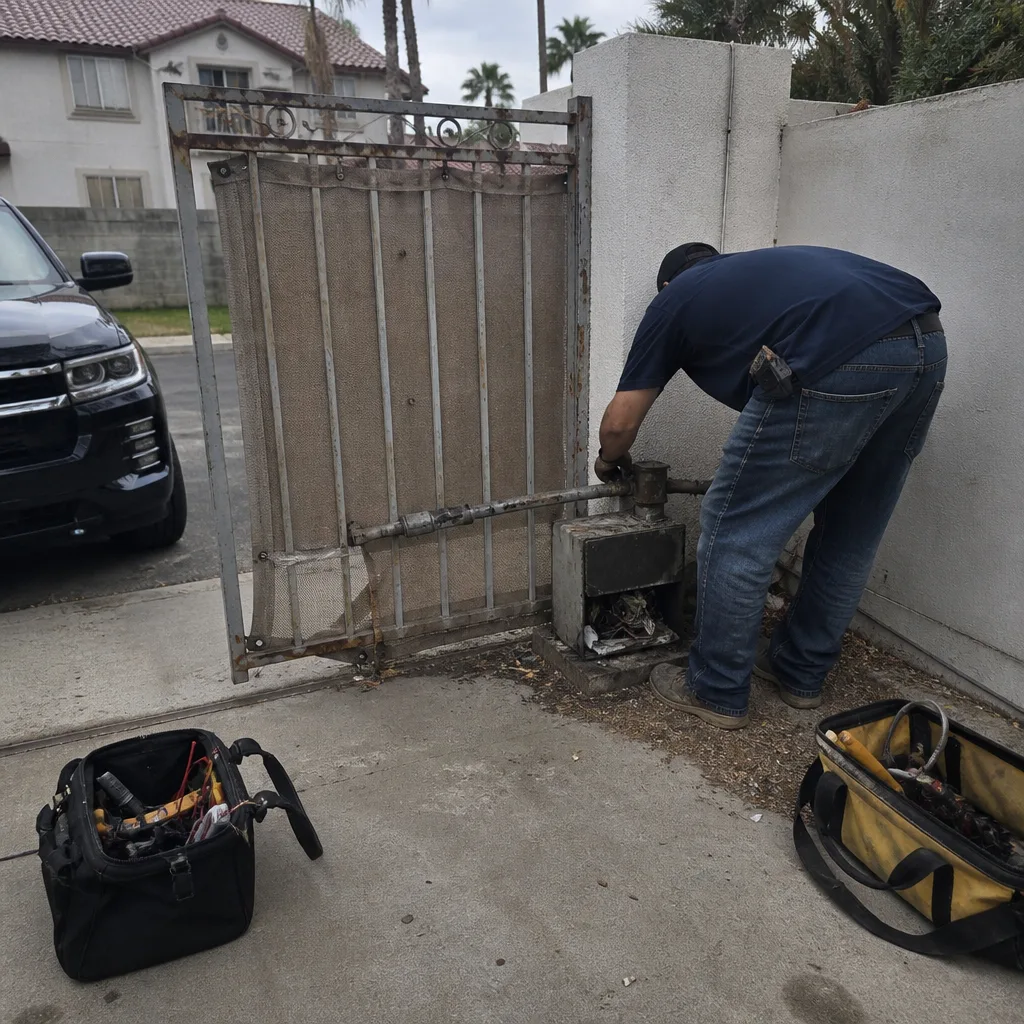 Before
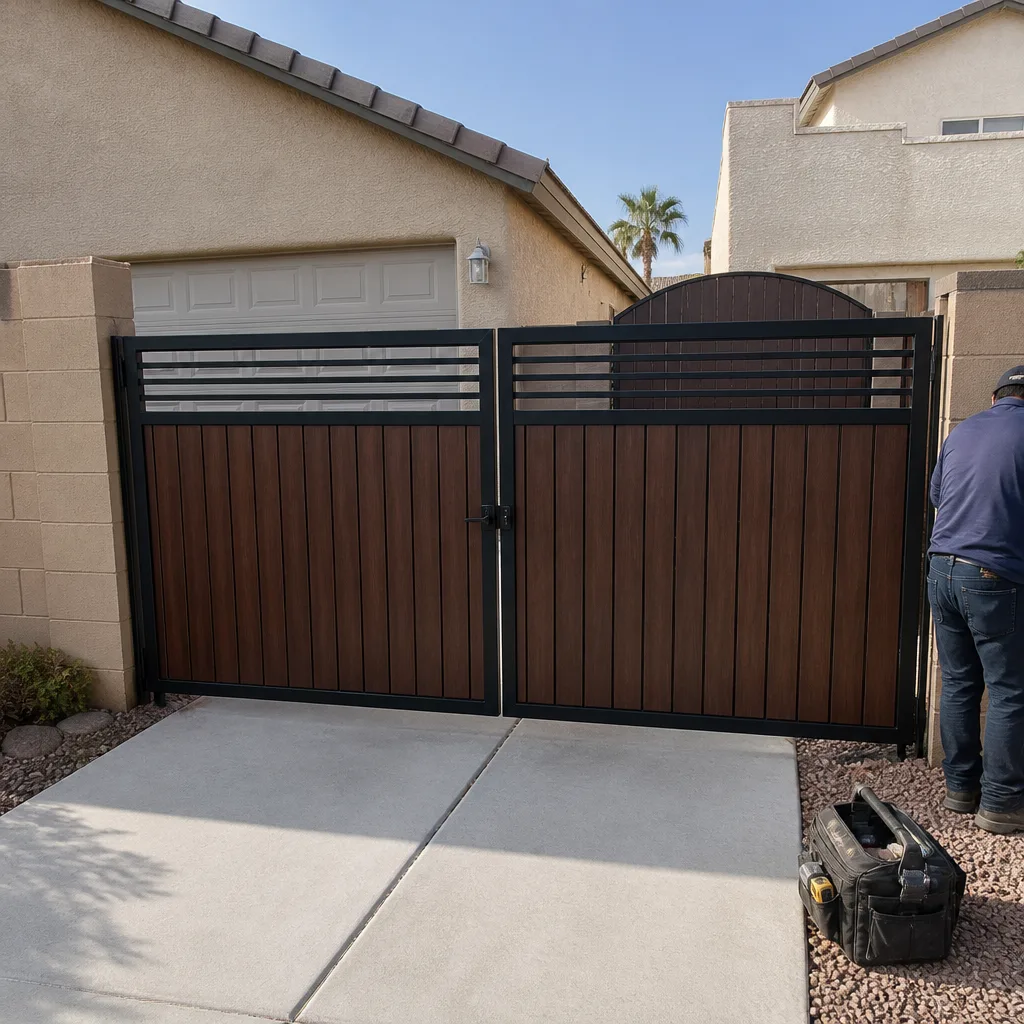 After
After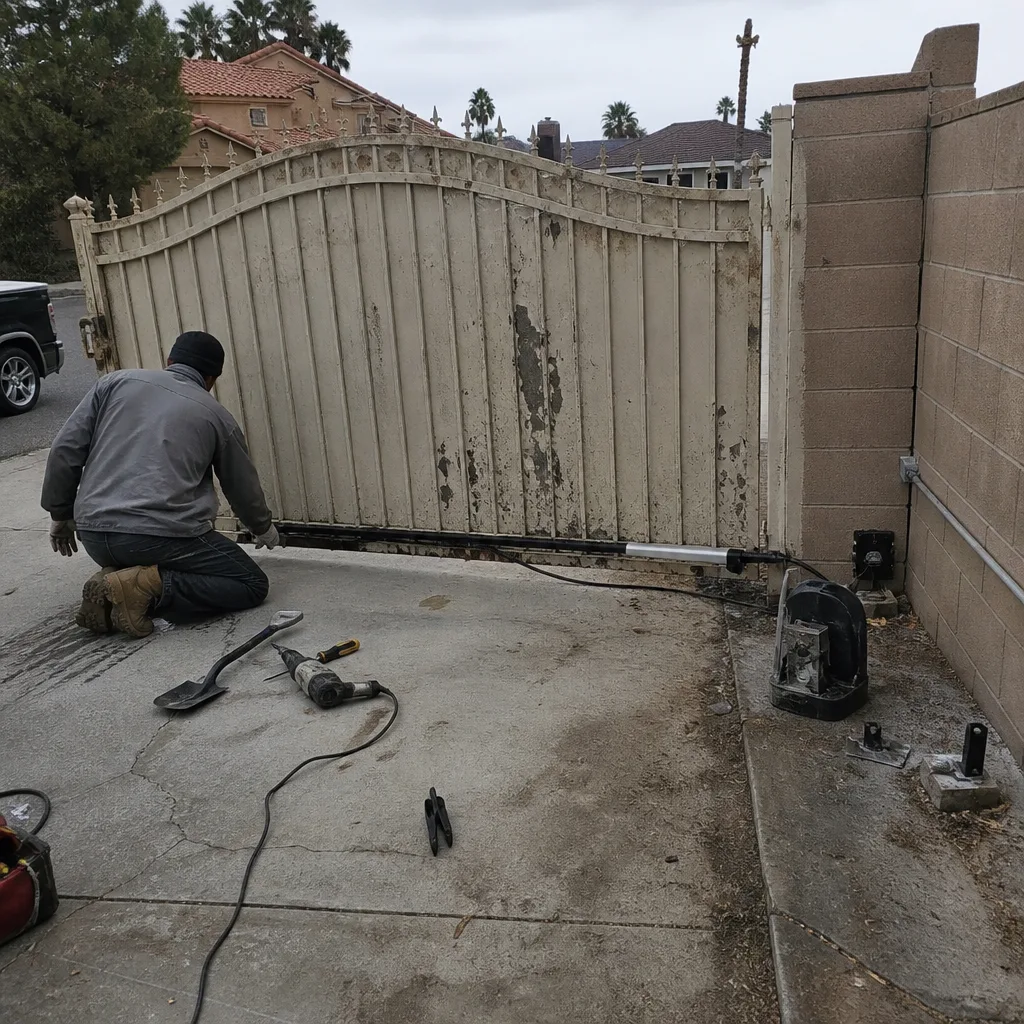 Before
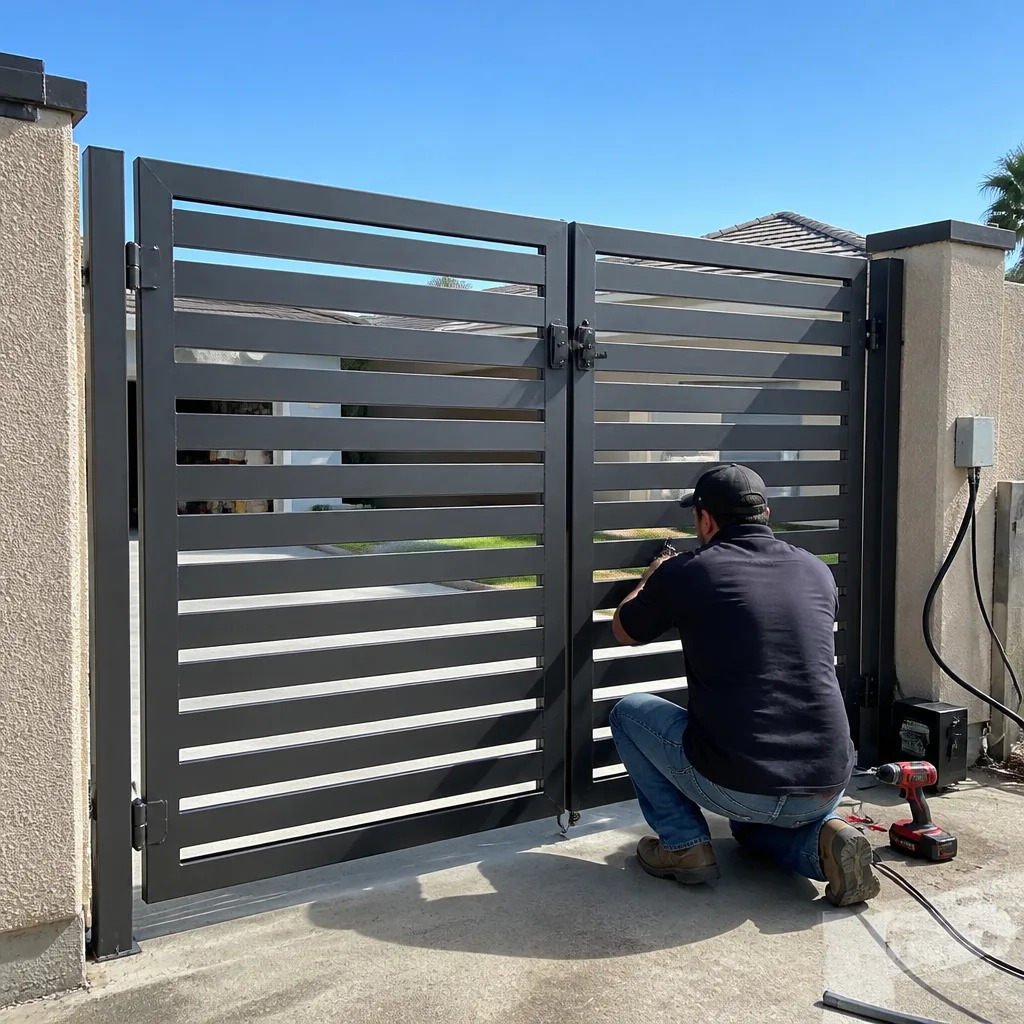 After
After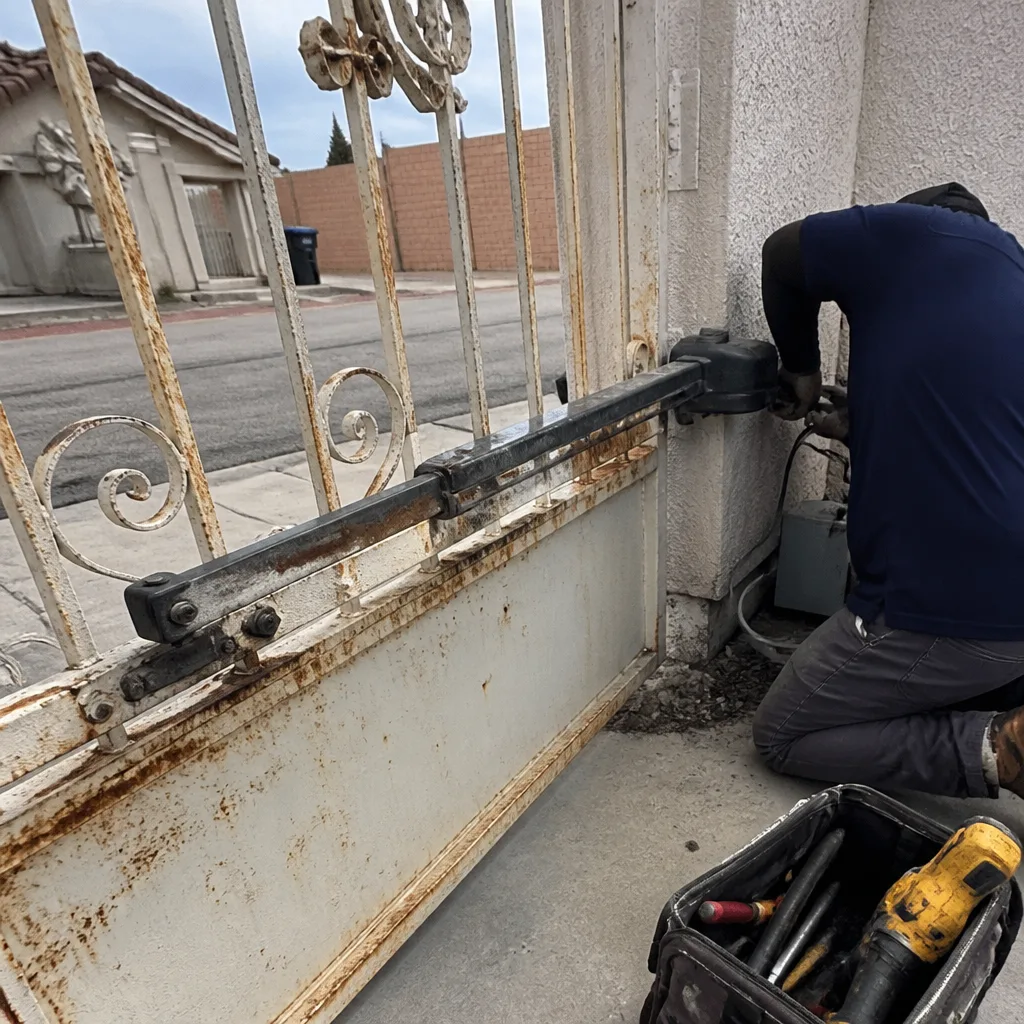 Before
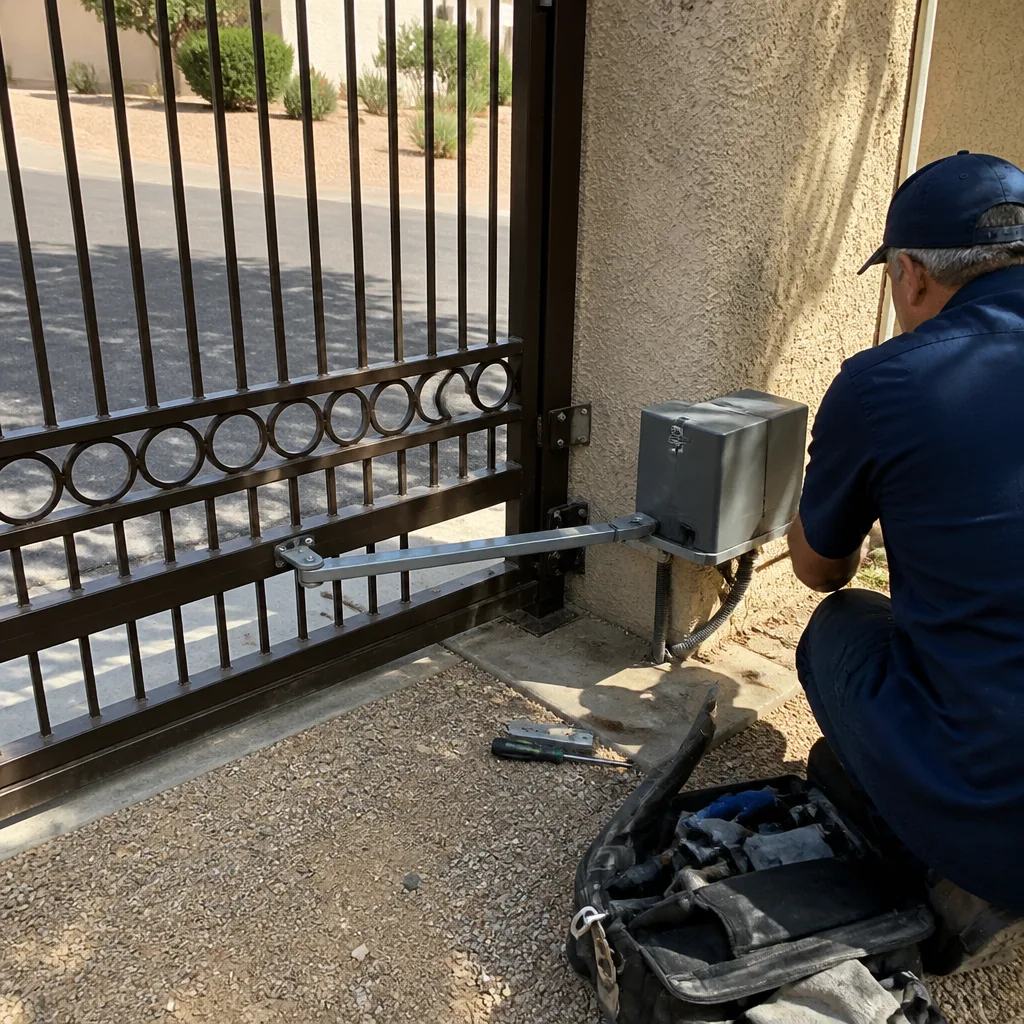 After
After