
Last updated October 16, 2026
 Wrought iron
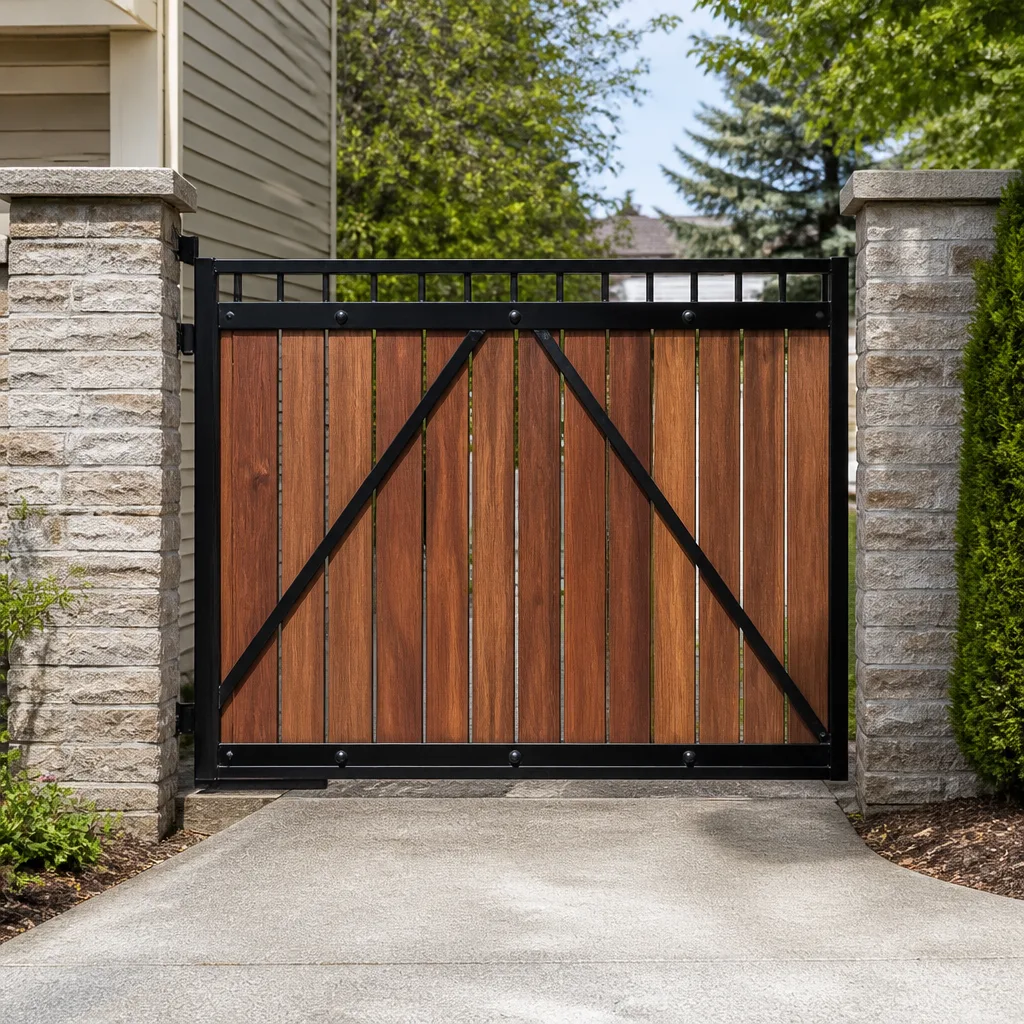 Wood & steel frame
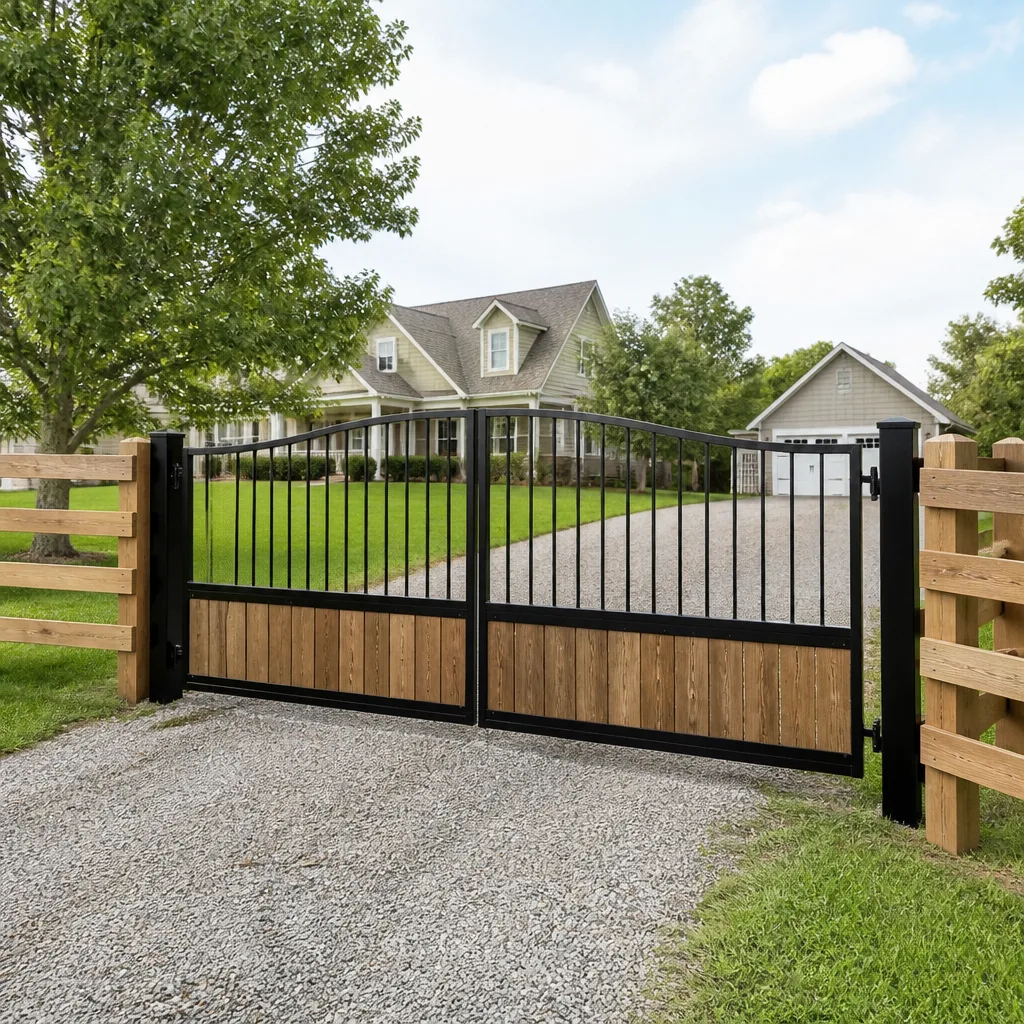 Farm & ranch
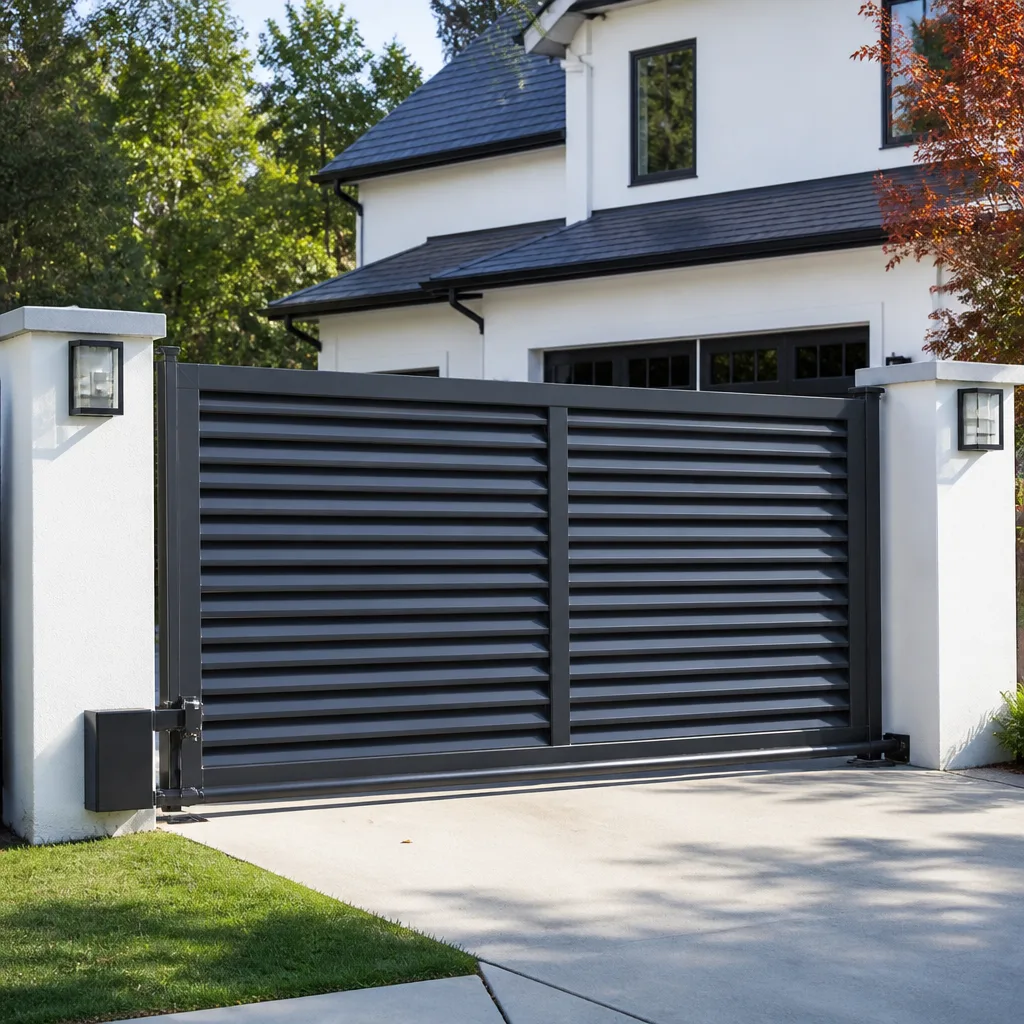 Sliding driveway gates
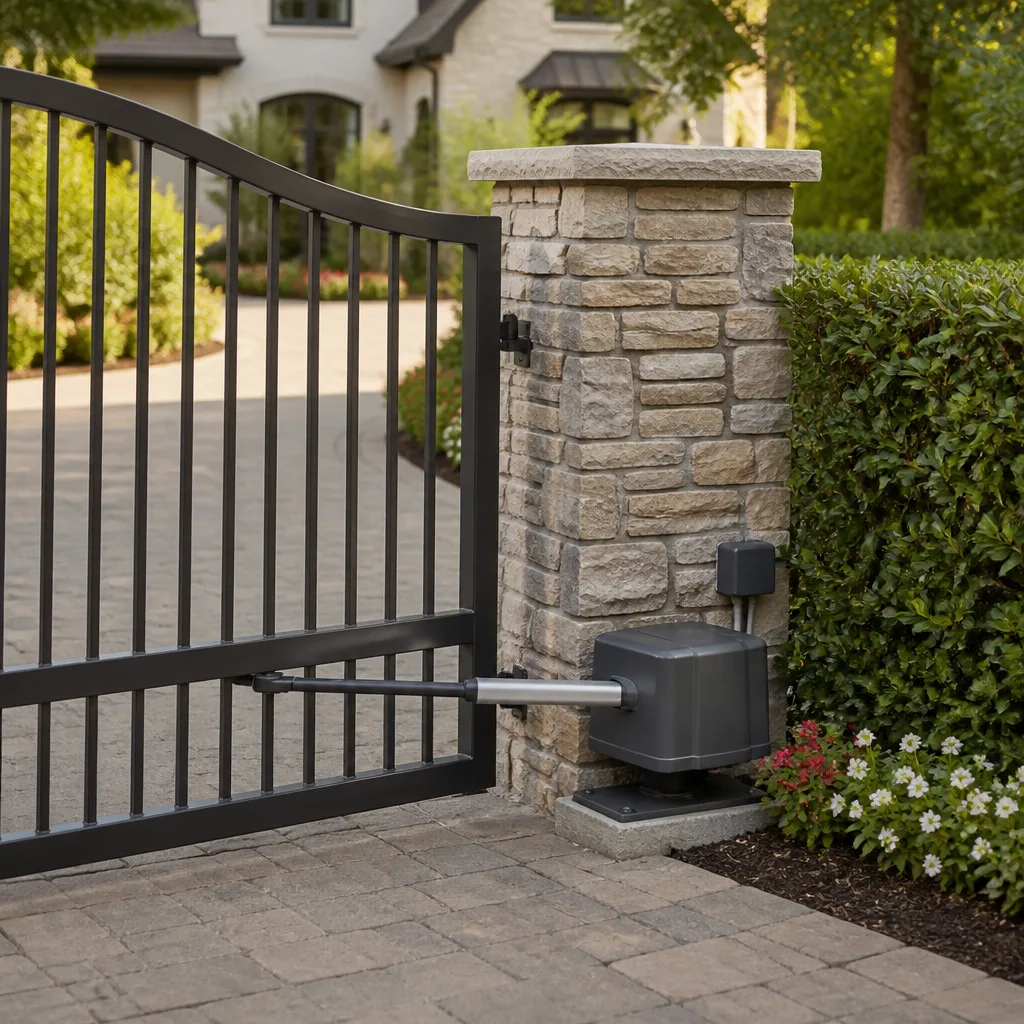 LiftMaster operators
Free on-site gate assessment - hinges, posts, and your LiftMaster or Nice gate operator checked before anything is quoted
The assessment is free and the quote is the invoice.
Get your free estimateThe Complete Guide to Gate Repair in Las Vegas
The average Las Vegas gate hinge corrodes roughly 40% faster than one in a coastal city, and it has nothing to do with salt air. The culprit is the alkaline dust that blows off the Spring Mountains and the caliche bedrock beneath nearly every neighborhood from Summerlin to Henderson. That dust settles into hinge pins, chain links, and motor housings, then reacts with zinc coatings and eats them from the inside out. Most gate repair guides read like they were written for a mild climate where gates fail politely. Yours doesn’t fail politely. This guide explains why Las Vegas gates break the way they do, what actually fixes them, and when a repair is worth doing versus when replacement makes more sense. By the end, you’ll know how to read a repair estimate without getting taken, which brands hold up in this climate, and why the standard 90-day labor warranty is almost never enough for a gate in Las Vegas.
Quick Answer
Gate repair in Las Vegas typically costs between $180 and $1,200 depending on whether it’s a hinge replacement, a gate motor repair, or a full automation system replacement. Most hinge and chain repairs can be completed same-day, while motor and control board work often requires one to three days for parts. The single most important thing you can do before hiring anyone is get a written price before work starts, because Las Vegas gates fail in ways that make “we’ll see once we open it up” the most expensive sentence in home repair.
Styles & brands we work with
Table of Contents
- How the Las Vegas Climate Kills Gates Faster Than Anywhere Else
- The 7 Most Common Gate Failures We See in Las Vegas
- Caliche Soil and Post Lean: Why Your Gate Post Keeps Tilting
- Gate Motor Repair in Las Vegas: What Fails, What It Costs, What to Do
- The Brands Las Vegas HOA Communities Actually Use
- How to Read a Gate Repair Estimate Line by Line
- The 365-Day Done Right Promise vs. a Standard 90-Day Labor Warranty
- Common Mistakes to Avoid
- When to Call a Professional
- Frequently Asked Questions
How the Las Vegas Climate Kills Gates Faster Than Anywhere Else
Three things work together to destroy gates in Las Vegas, and most national repair guides don’t mention any of them. Understanding these forces matters because they determine whether a repair lasts three years or fifteen.
Alkaline dust. The soil around Las Vegas is highly alkaline, with pH levels routinely between 8.0 and 9.5 in areas like Green Valley, Anthem, and Summerlin. Wind lifts that dust and deposits it into every moving part on your gate: hinge pins, chain links, bearing plates, and motor couplers. The dust acts as a mild abrasive and a chemical accelerant, stripping protective coatings and then trapping moisture against bare steel. That’s the 40% faster corrosion figure from the top of this guide, and it’s why a hinge that would last twenty years in San Diego needs replacement in twelve here.
Caliche bedrock. Beneath most Las Vegas lots sits caliche, a rock-hard layer of calcium carbonate that forms naturally in arid climates. Caliche sits anywhere from six inches to three feet below the surface. Gate posts set into or on top of caliche don’t anchor properly, and the freeze-thaw cycles that don’t happen in Las Vegas are replaced by thermal expansion cycles that do. We’ll cover this in detail below.
110°F heat cycles. A metal gate in Las Vegas can reach 160°F or higher on a July afternoon, then cool to 80°F overnight. That’s an 80-degree swing every single day for four months straight. Steel expands and contracts with every cycle. Welds crack. Powder coating micro-fractures. Circuit boards inside gate motors bake. Plastic gear teeth lose tensile strength. Manufacturers test their products in labs, but very few test for 110 consecutive days of 110-degree heat with UV index readings above 10. The result is that warranties that look impressive on paper get voided or simply outlived by the actual operating conditions your gate endures every summer.
In our experience repairing gates across Las Vegas since 2008, the homeowners who get the longest life from their gates are the ones who accept that this climate requires different maintenance intervals and different replacement parts than the national average. A galvanized hinge is not optional here. A shaded motor housing adds years. A control board with a heat sink is worth the extra $80. These are Las Vegas decisions, not generic ones.
The 7 Most Common Gate Failures We See in Las Vegas
Here’s what actually breaks, in order of how often we see it, based on thousands of service calls across the Las Vegas valley. Gate repair in Las Vegas follows patterns that differ from other markets because of the climate factors above.
1. Hinge Corrosion and Sag
Alkaline dust eats hinge pins from the inside. The gate starts to sag, then scrapes the ground, then the hinge barrel cracks entirely. This is the single most common repair call we field in every Las Vegas neighborhood. The fix is almost always replacement of the hinge set with galvanized or stainless hardware, not adjustment. Adjustment buys weeks. Replacement buys years.
2. Gate Motor Capacitor Failure
The capacitor is the component that gives a gate motor its initial surge of power to start moving. Heat kills capacitors. In Las Vegas, a capacitor that would last five years in a mild climate lasts two to three. The symptom is a motor that hums but doesn’t move, or a gate that opens halfway and stops. This is one of the few gate repairs that’s genuinely inexpensive when caught early.
3. Post Lean from Caliche Issues
We cover this in depth below, but the short version is that the expansive soil and shallow caliche layer in Las Vegas cause posts to tilt in ways that require a deeper footing, not a quick reset. A leaning post stresses the hinges, the latch, and the motor, and it never fixes itself.
4. Circuit Board and Control Board Burnout
Control boards sit inside sealed motor housings that trap heat. When ambient temperatures hit 110°F, the interior of a black metal motor box can exceed 140°F. Solder joints weaken. Capacitors on the board itself swell and leak. Boards from quality brands like LiftMaster and Viking hold up better than off-brand boards, but they all have a finite heat budget. We replace more control boards between June and September than in the other nine months combined.
5. Chain and Sprocket Wear
Dust intrusion accelerates chain wear. A dry chain with alkaline dust embedded in the links acts like sandpaper on a sprocket. Once the sprocket teeth begin to hook, the chain starts slipping, and the gate jerks or binds. Lubrication helps, but only if done with the right product and at the right interval, and almost nobody in Las Vegas does it often enough because the dust re-coats the chain within a week.
6. Sensor and Safety Edge Malfunction
Photoelectric sensors (the small eyes near the bottom of the gate) fail from dust coating, sun glare, and spider webs. Safety edges, the pressure-sensitive strips on the gate’s leading edge, crack and degrade under UV exposure. Both are UL 325 safety requirements, and both need to function correctly or your gate becomes a liability. Some failures are cleanable. Most UV-damaged safety edges in Las Vegas are not.
7. Keypad and Remote Receiver Failure
Keypads bake in direct sun and their membrane buttons lose conductivity. Remote receiver antennas inside metal housings suffer from signal degradation as the metal heats up. If your gate opens with the keypad but not the remote, or vice versa, the issue is usually the receiver relay or the keypad’s internal traces, not the remote battery.
Key Takeaways
- Hinge corrosion is the number one Las Vegas gate failure, and it’s driven by alkaline dust, not water
- Capacitors and control boards fail from heat: expect shorter component life than the national average
- Post lean from caliche soil requires a deeper footing, not a cosmetic reset
- Safety sensors and edges are UL 325 requirements and need regular inspection in this climate
- A written price before work starts protects you from estimate padding on repairs with multiple possible causes
Caliche Soil and Post Lean: Why Your Gate Post Keeps Tilting
Every gate repair company in Las Vegas has reset posts. Few do it in a way that sticks. Here’s why most post resets fail within three years and what a correct fix looks like.
Caliche is a natural cement-like layer of calcium carbonate that forms in arid soils. In Las Vegas, it sits on average two to three feet below grade across most of the valley, though it can be shallower in Anthem and some parts of Henderson. When a gate post is installed, the hole is usually dug three feet deep with a 12-inch diameter. If the hole hits caliche at two feet, the installer stops and calls it good. The post gets set in concrete that’s only two feet deep, and the concrete bears against caliche that’s harder than the concrete itself.
The problem compounds during the summer. The upper soil layer expands and contracts with heat. The caliche doesn’t move. The post, anchored in that shallow upper layer, begins to lean as the soil around it shifts microscopically with each thermal cycle. Within two to three years, the lean becomes visible. Within five, the gate scrapes the ground and the hinges begin to fail from the constant off-axis load.
The correct repair, and the one Warden Gate Repair performs, is a re-set with a deeper footing that breaks through the caliche or extends well into it:
- Remove the gate leaf and the old post entirely, including the old concrete plug.
- Excavate to a depth of 36 to 48 inches, depending on soil conditions at the specific Las Vegas property. If caliche is encountered at 24 inches, the footing continues through it rather than stopping at it.
- Set the new post (or cleaned and repaired old post) in a concrete footing with a wider base at the bottom, typically 18 to 24 inches in diameter at the base narrowing to 10 to 12 inches at grade. This wider base resists the lateral forces that cause lean.
- Allow the concrete to cure for a minimum of 72 hours before re-hanging the gate. Any company that re-hangs the gate the same day the concrete is poured is doing it wrong, regardless of what the bag says about fast-set mix.
- Re-align the hinges, the latch, and the motor mount. A post that’s even half a degree out of plumb will wear every other component prematurely.
A proper post reset in Las Vegas costs between $600 and $1,200 per post depending on depth, caliche hardness, and whether the post itself is salvageable. It’s not cheap, but it’s the difference between a five-year fix and a fifteen-year fix. The cheap $300 reset that takes two hours and re-hangs the gate the same day is almost always the same fix you’ll pay for again in three years.
Gate Motor Repair in Las Vegas: What Fails, What It Costs, What to Do
When your gate motor (the box that slides or swings your gate automatically) stops working in Las Vegas, there are four likely causes, and the cost to fix each one ranges from about $120 to over $1,800. Gate motor repair in Las Vegas is the single most common service call we handle every summer, and the patterns are consistent.
What Fails and What It Costs
- Capacitor replacement: $120 to $220. This is the best-case scenario. The motor hums but doesn’t move, or the gate moves slowly and stops. A new capacitor is a 20-minute fix.
- Limit switch replacement: $150 to $300. The gate doesn’t stop at the right point, or it reverses immediately after closing. Limit switches wear out or get corroded by dust.
- Gear box replacement: $350 to $700. Grinding noise or a motor that runs but the gate doesn’t move usually means stripped plastic gears inside the gear box. Heat significantly shortens gear life in Las Vegas.
- Control board replacement: $250 to $600. Intermittent operation, no response from remote or keypad, or burned spots on the board are the telltale signs. Summer heat kills boards; expect this at least once every 5 to 7 years on a Las Vegas motor.
- Complete motor replacement: $800 to $1,800 installed. When the motor is more than 10 years old, or two major components have failed within a year, replacement usually makes more financial sense than continued repair. This includes the motor, new mounting hardware, programming, and safety system verification.
What to Do Before You Call
- Check the breaker. Gate motors are usually on their own circuit. If it tripped, reset it once. If it trips again, leave it off and call. Repeated tripping means a short, not a coincidence.
- Check the manual release. Every gate motor has a mechanical release that lets you operate the gate by hand. If the gate operates fine manually, the problem is in the motor or electronics, not the physical gate.
- Check the safety sensors. If anything is blocking the photoelectric eyes, or they’re caked with dust, the motor will refuse to operate by design. Clean them gently and make sure they’re aligned.
- Listen. A hum with no movement is usually the capacitor. A grinding sound is usually gears. No sound at all is usually the board or a power issue. Write down exactly what you hear before you call a repair company: it helps them bring the right parts on the first trip.
We always give a written price before any electric gate repair in Las Vegas begins. That’s a non-negotiable at Warden Gate Repair, and it’s the reason our techs carry more diagnostic equipment than parts: we’d rather spend ten minutes confirming the diagnosis and quote you accurately than guess, order the wrong part, and leave your gate broken for a week.
The Brands Las Vegas HOA Communities Actually Use
Walk through the gated communities of Summerlin, Green Valley Ranch, Mountain’s Edge, or Aliante, and you’ll notice the same three or four brand names on most gate operators. Here’s what to know about each and what they typically need at the five-year mark.
LiftMaster. The most common residential gate motor in Las Vegas, especially in communities built after 2010. LiftMaster operators are generally reliable, but their plastic gear sets don’t love 110°F heat. At the five-year mark, expect to replace the gear box on units with heavy gates. LiftMaster also has a proprietary remote system that makes adding additional remotes straightforward but means you need LiftMaster-compatible accessories.
Viking. Common in larger lots and estate properties. Viking makes heavier-duty swing gate operators with steel gears, which hold up better in heat than plastic. The tradeoff is cost: Viking parts are more expensive, and Viking control boards are less forgiving of power surges, which are common in Las Vegas during monsoon-season thunderstorms.
DoorKing. The workhorse of Las Vegas HOA communities from the 1990s and 2000s. DoorKing slide gate operators are everywhere in older guard-gated neighborhoods. They’re durable and parts are widely available, but original DoorKing boards are no longer manufactured, which means repairs often involve rebuilt or aftermarket boards. At the five-year interval, DoorKing units typically need limit switch replacement and chain tension adjustment.
We’re factory-trained and authorized for service on nine major brands including LiftMaster, Viking, Linear, BFT, Ghost Controls, DoorKing, Elite, FAAC, and Mighty Mule. That matters because a gate motor is not a generic appliance. Each brand has its own programming sequences, torque specifications, and failure modes. The tech who fixes a Viking board with LiftMaster-repair instincts will cost you more money in the long run.
How to Read a Gate Repair Estimate Line by Line
If you’ve never looked closely at a gate repair estimate, here’s how to tell the difference between legitimate Las Vegas conditions and padding. We write estimates for a living, and we know what every line item should cost in this market.
Legitimate Line Items
- Service call / diagnostic fee: $49 to $89 in Las Vegas. Some companies waive this if you proceed with the repair. A diagnostic fee above $100 should make you ask questions.
- Parts: Should be listed individually with part numbers or clear descriptions. If the estimate just says “parts” with one lump number, that’s a red flag. Ask for the list.
- Labor: $90 to $150 per hour is the normal range for licensed gate repair in Las Vegas. Most hinge replacements are one to two hours. Most motor replacements are two to three hours. If you see six hours of labor for a hinge replacement, that’s padding.
- Disposal fee: $25 to $75 if the old motor or gate section is being hauled away. This is standard.
- Permit or HOA compliance coordination: Rarely needed for repairs on existing gates, but some Las Vegas HOA communities require approval for visible changes like full gate replacement. If this line appears, ask what specific HOA or municipal requirement it covers.
Red Flags That Are Pure Padding
- “Weather hardening” upcharge: A legitimate Las Vegas repair company builds climate considerations into the base quote. A separate line item for “hot climate protection” is a made-up charge.
- Miscellaneous supplies: Without a list of what those supplies are, this is a blank check. Bolts, fasteners, and lubricant should be included in the labor or parts line.
- “Emergency” surcharge after the fact: If you didn’t ask for emergency service and the company didn’t quote the emergency rate before dispatching, that fee is not legitimate.
- Two techs for a one-tech job: Unless the gate is a heavy steel slide gate that requires two people for safe handling, a hinge replacement or motor swap is a one-tech job. Two techs on the invoice for a residential swing gate repair is padding.
The single best protection against estimate padding is simple: get the written price before work starts, and make sure it says the price is final unless you approve changes in writing. Warden Gate Repair gives every customer a written price before any work begins, always. No exceptions, no “we’ll see once we get in there,” no surprise line items at the end. If a company won’t put it in writing, that’s your signal to call someone else.
The 365-Day Done Right Promise vs. a Standard 90-Day Labor Warranty
Most gate repair companies in Las Vegas offer a 90-day labor warranty. That’s the industry standard, and here’s what it means in practice: if the repair fails on day 91, you’re paying full price again. Now think about what we covered earlier in this guide. Capacitors fail from heat. Hinges corrode from alkaline dust. Control boards burn out in summer. A repair done in October might not show its first sign of weakness until the following June, which is well outside the 90-day window.
The 365-Day Done Right Promise from Warden Gate Repair covers every repair for a full year. If the repair isn’t right, we make it right. That includes a free return visit to diagnose and fix the issue, parts and labor included, for 365 days from the date of service. It’s a written guarantee on every job, not a verbal promise from a dispatcher.
The name matters here. A warden is trusted to watch over a place and keep it secure, and that’s the entire idea behind the promise: we stand watch over the repair for a full year, not 90 days. In a climate where gates break faster and more unpredictably than anywhere else in the country, that extra 275 days of coverage is the difference between a repair that feels safe and a repair that actually is.
No insurance claim forms. No fine print about “acts of God.” If the repair fails because a part was defective, because the installation was flawed, or because the repair didn’t hold up to normal conditions in Las Vegas, it’s covered. That’s the whole promise.
Common Mistakes to Avoid
- Lubricating a chain with WD-40. WD-40 is a solvent, not a lubricant. It strips oil and leaves the chain drier than before. In Las Vegas dust conditions, a dry chain grinds its sprockets to hooks within months. Use a dry-film lubricant designed for gate chains.
- Ignoring a sagging gate for “just one more month.” A sagging gate puts off-axis load on hinges, the latch, and the motor. Every week of sag accelerates wear on components that would have stayed healthy for years if the gate had been re-hung promptly.
- Replacing only the capacitor when the board shows heat damage. If the capacitor failed from heat, the board has been cooking too. Replacing just the capacitor is a short-term patch that often fails again within months. Get the board inspected at the same time.
- Doing a same-day post re-set. As covered above, concrete needs time to cure before the gate is re-hung. A company that re-hangs the gate the same afternoon the concrete goes in is cutting corners that will cost you a repeat repair.
- Choosing the cheapest quote without reading the line items. A $250 hinge repair that becomes a $700 board replacement “discovered” mid-job is not cheaper than the honest $400 quote. The written price before work starts is your protection.
- Buying the largest motor than necessary in Las Vegas. An oversized motor generates more heat, and heat is your enemy. The right-sized motor for your gate, properly installed with adequate ventilation, will last longer than a bigger motor running hot.
- Ignoring the safety edges because the gate “looks fine.” UV degradation in Las Vegas hardens and cracks safety edges even when they look intact from the outside. A failed safety edge is a real injury risk, especially for children and pets, and it’s a UL 325 compliance issue for you as the property owner.
When to Call a Professional
Call a gate repair professional when the gate is scraping the ground, the motor hums but doesn’t move, the gate reverses unexpectedly, or the gate has been leaning visibly for more than a few weeks. These are not conditions that improve with time, and every week of deferred repair adds cost to the eventual fix. Also call immediately if your gate starts and stops unpredictably while people or pets are near it: a gate motor under inconsistent control is a genuine safety hazard, not a scheduling inconvenience.
For anything involving the gate motor, the control board, or structural post work, don’t attempt a DIY repair. Gate operators run on high-torque mechanical systems, and a gate leaf under spring or motor tension can move unexpectedly. A trained professional with the right tools and the right brand-specific knowledge will diagnose the actual problem instead of guessing at symptoms. Warden Gate Repair Las Vegas offers free estimates in Las Vegas – call (725) 529-9468 for a written quote before any work begins.
Visit the Warden Gate Repair Las Vegas home page to learn more about our 365-Day Done Right Promise and the Threshold Standard.
Frequently Asked Questions
Gate repair in Las Vegas typically costs $180 to $1,200. Simple repairs like hinge replacement, capacitor replacement, or keypad reprogramming run $180 to $400. Motor gear box replacement runs $350 to $700. Control board replacement runs $250 to $600. Full motor replacement runs $800 to $1,800 installed. At Warden Gate Repair, you’ll receive a written price before any work starts, and every repair is covered by the 365-Day Done Right Promise.
Many hinge, chain, and capacitor repairs can be scheduled same-day or next-day in Las Vegas. Motor and control board replacements may take one to three days if the specific part for your LiftMaster, Viking, DoorKing, or other brand needs to be ordered. Call (725) 529-9468 and a live person will answer 24/7 to schedule a free estimate.
Heat is the primary reason. Las Vegas gate motors operate in ambient temperatures that can exceed 110°F, with internal motor housing temperatures reaching 140°F or higher. That level of sustained heat degrades capacitors, plastic gears, and control boards significantly faster than in milder climates. Choosing a motor sized correctly for your gate and ensuring proper ventilation extends component life meaningfully.
Yes. Warden Gate Repair is factory-trained and authorized for service on nine major gate and opener brands, including Viking, BFT, Linear, Ghost Controls, LiftMaster, FAAC, DoorKing, Elite, and Mighty Mule. Our techs carry brand-specific diagnostic knowledge and parts sourcing for all nine brands, so the right fix arrives the first time.
A gate post needs a re-set if it’s leaning visibly but the post itself is not cracked, rusted through, or bent. A post needs full replacement if the steel is structurally compromised or if the existing post is too short to set at the proper depth for Las Vegas caliche soil conditions. We evaluate this during the free estimate and explain exactly what we’re seeing and what the written price covers.
No. The 90-day labor warranty is an industry standard that doesn’t account for how Las Vegas gates fail. Heat-related failures like capacitor burnout and board fatigue often take months to surface. The 365-Day Done Right Promise from Warden Gate Repair covers every repair for a full year, including a free return visit if the repair fails, and every customer receives that promise in writing on every job.
The Bottom Line
Las Vegas gates fail faster and differently than gates anywhere else in the country because of the specific combination of alkaline dust, caliche soil, and extreme heat cycles that this valley throws at them. Understanding those failure modes is the difference between fixing a symptom and fixing the actual problem. The hinge that corrodes from alkaline dust, the post that leans because it was set too shallow for caliche, the capacitor that burns out from heat: these are all predictable, addressable, and preventable with the right knowledge and the right repair partner. Get the written price before work starts. Get a warranty that covers a full summer season, not just 90 days. And get a technician you know by name and photo before they arrive at your gate. The Gate Repair in Las Vegas and Electric Gate Repair in Las Vegas guides cover these topics in more depth if you need to go deeper.
Written by Cole Rafferty, Owner at Warden Gate Repair Las Vegas, serving Las Vegas since 2008.
See the difference
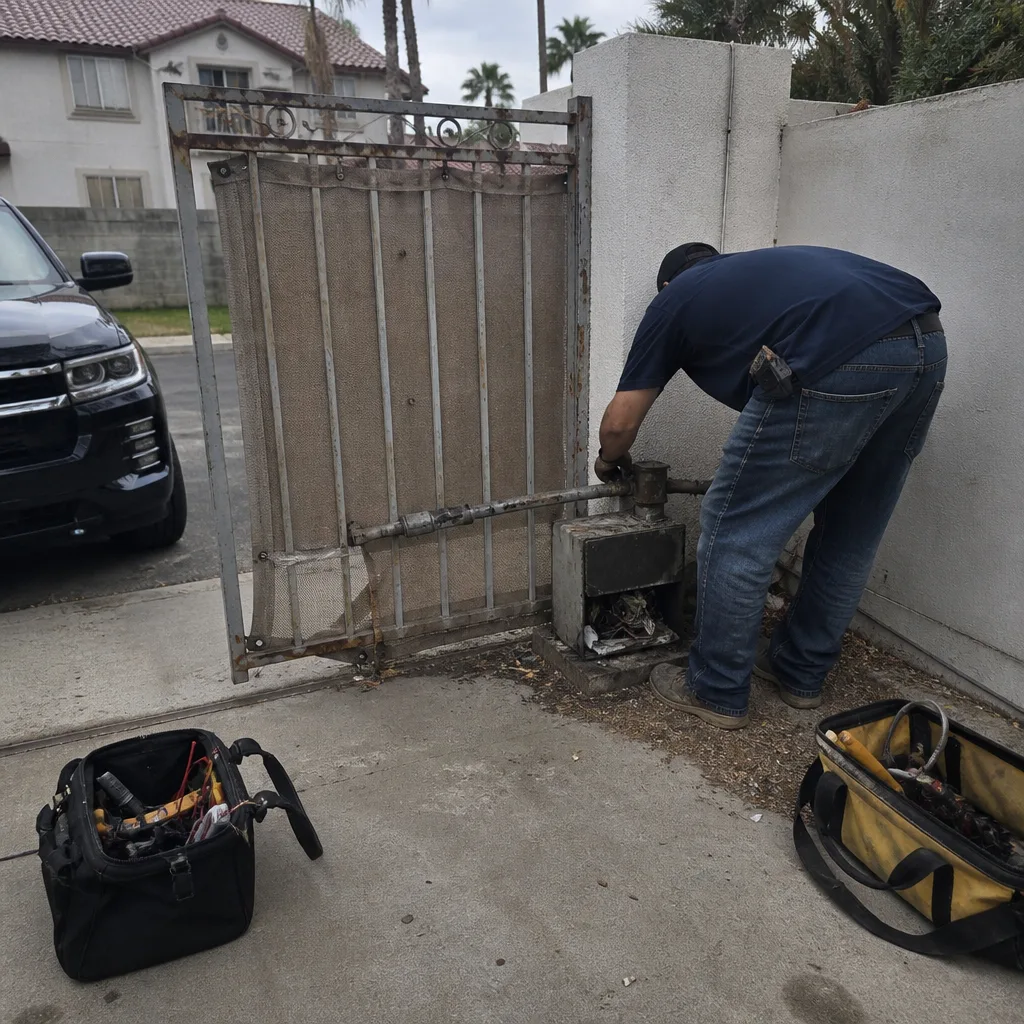 Before
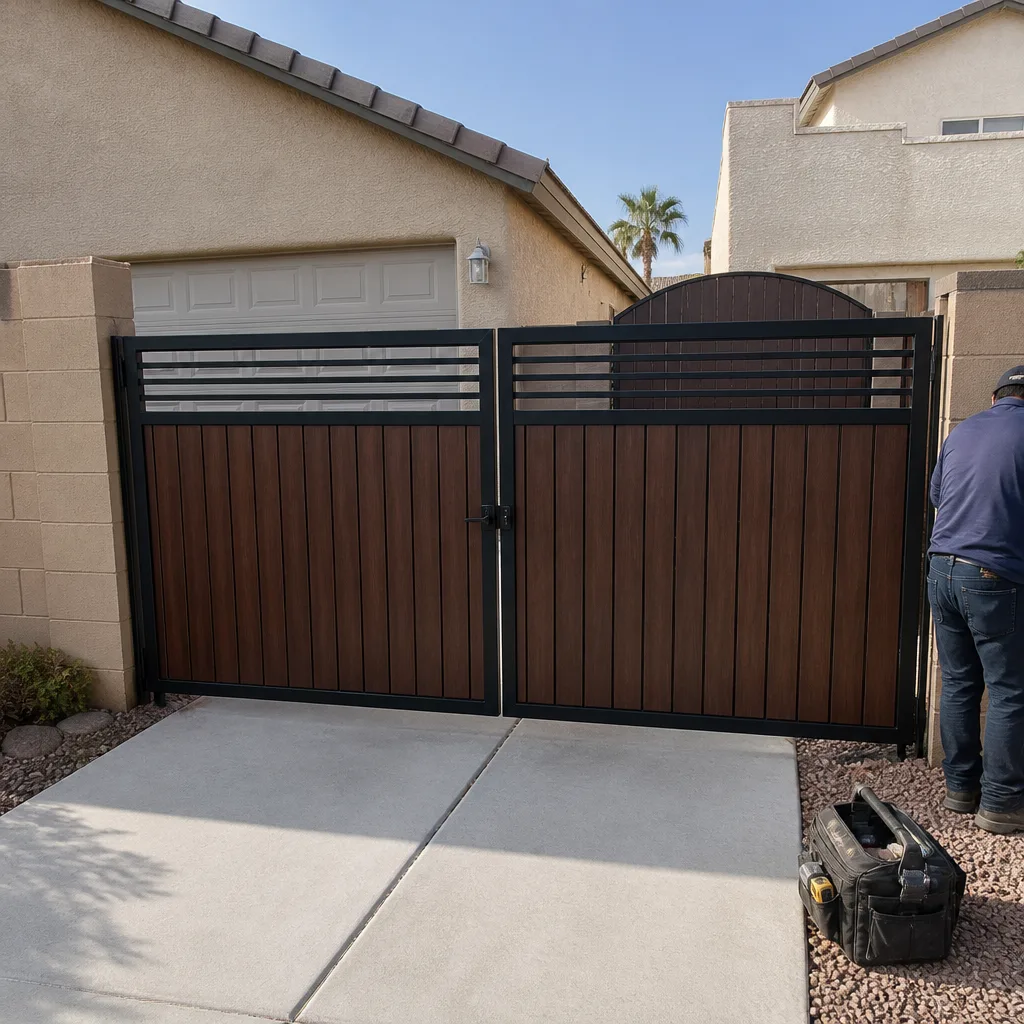 After
After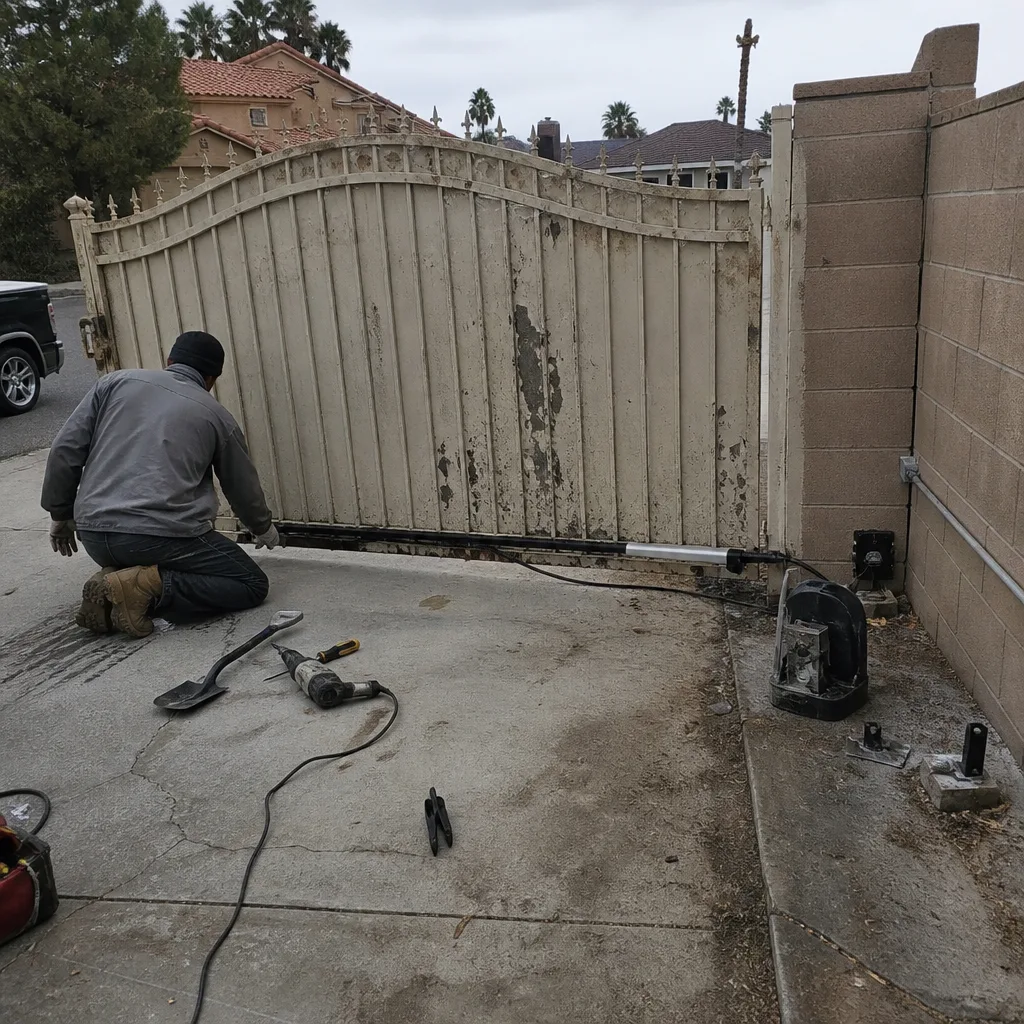 Before
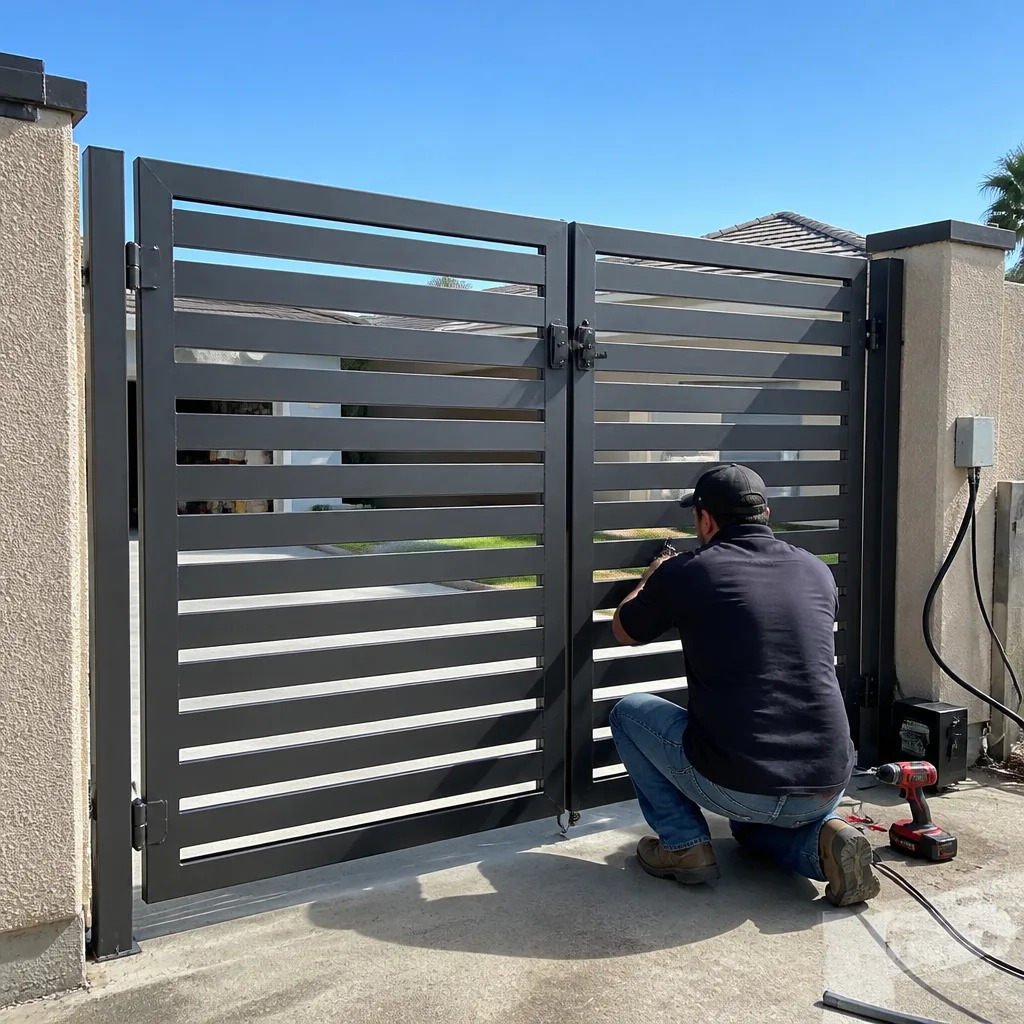 After
After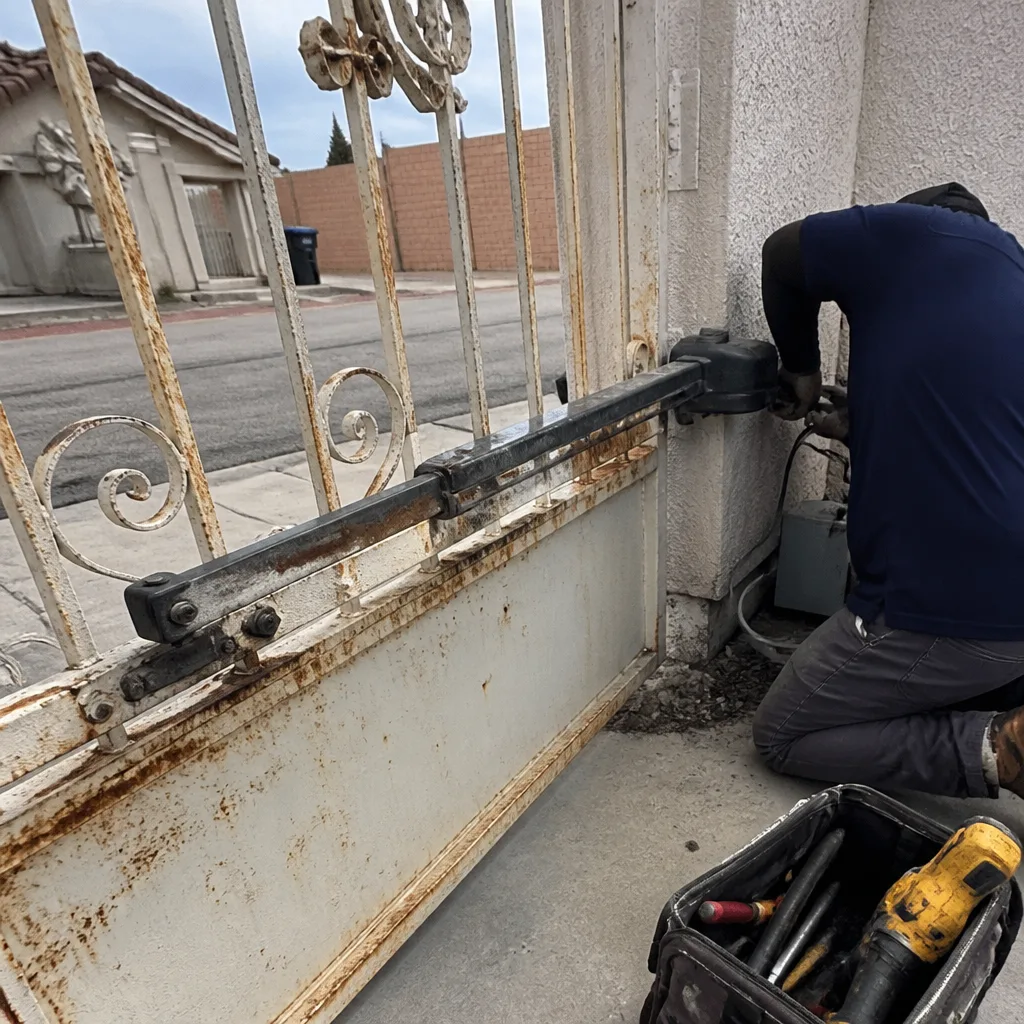 Before
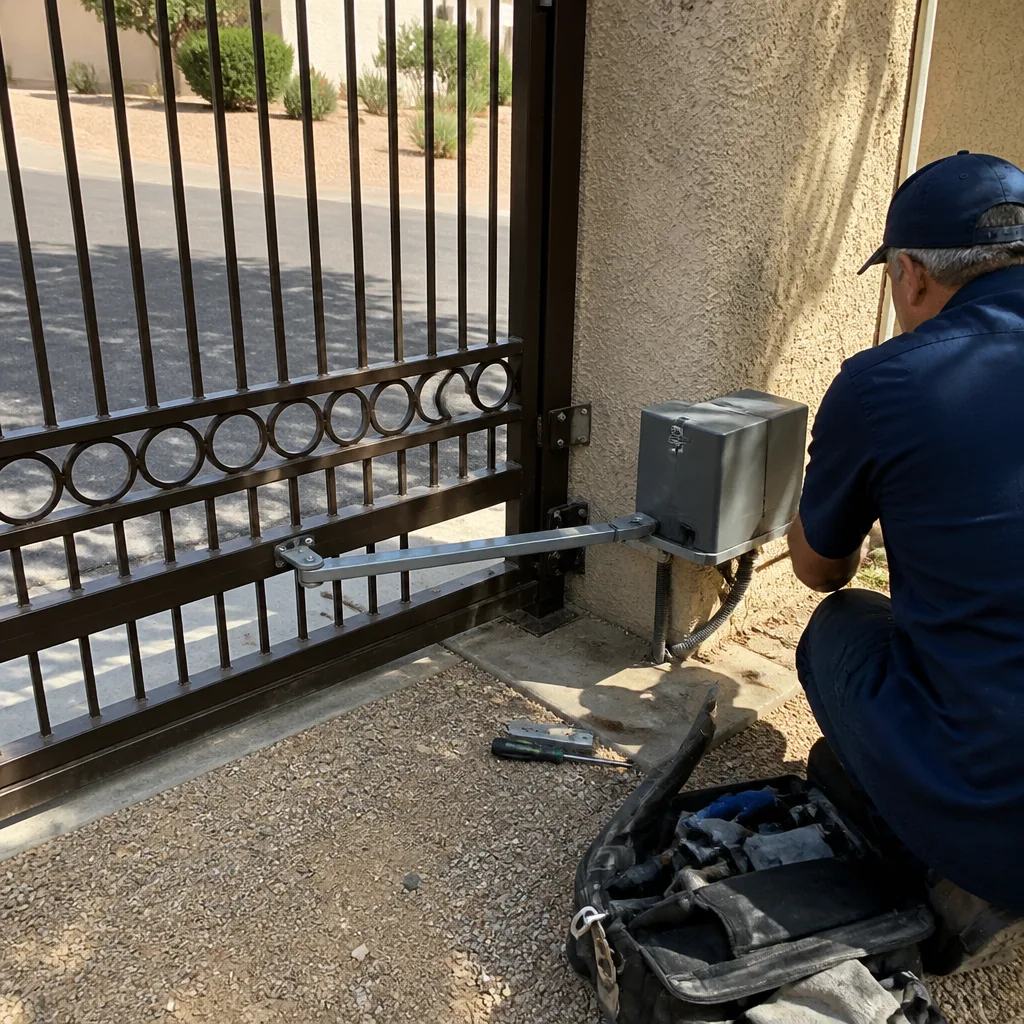 After
After