
Last updated October 16, 2026
 Wrought iron
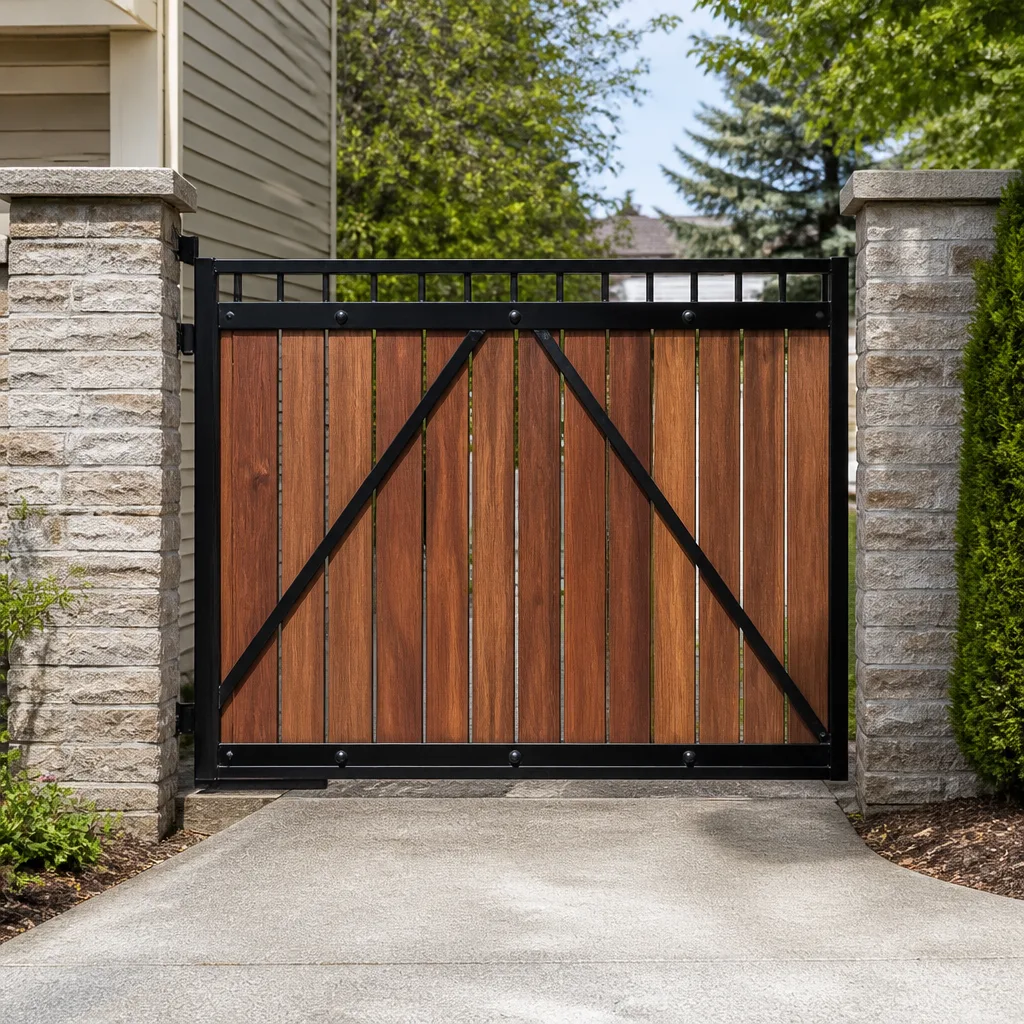 Wood & steel frame
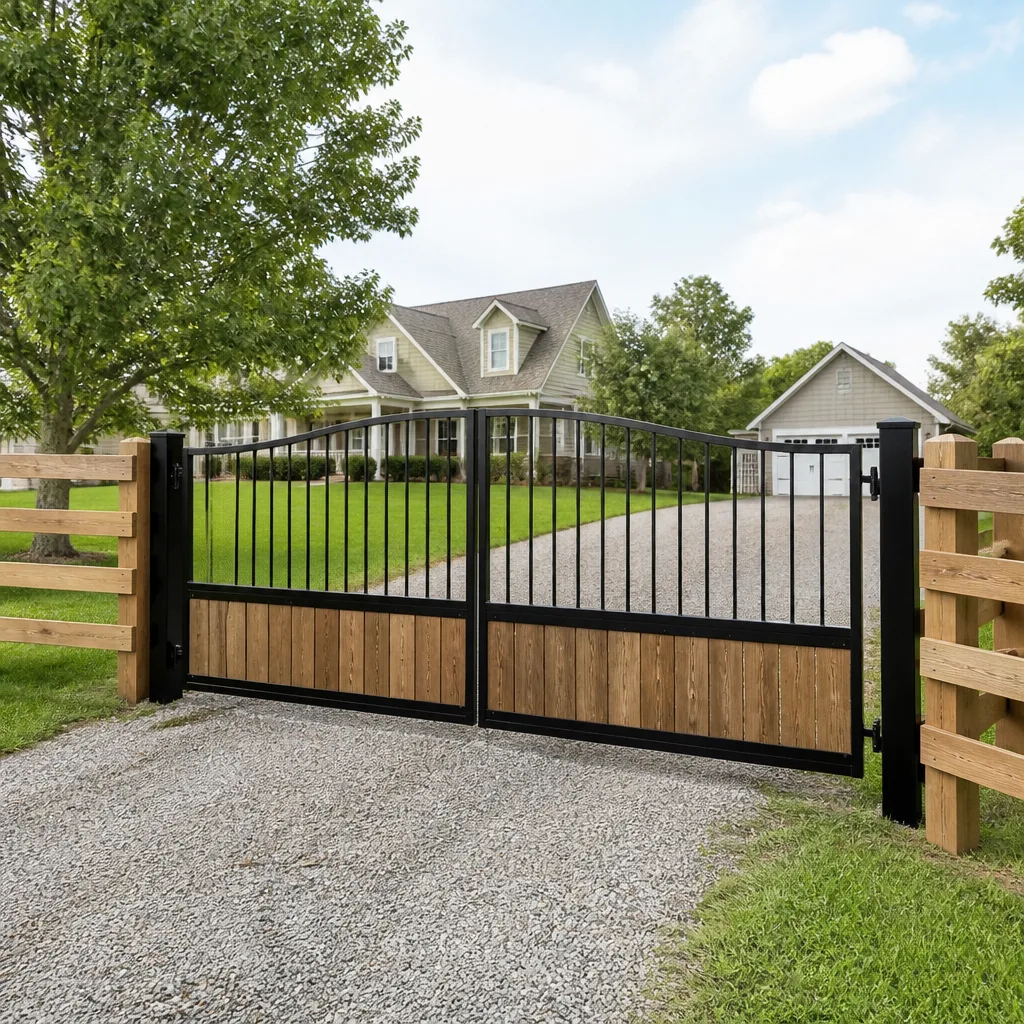 Farm & ranch
 Sliding driveway gates
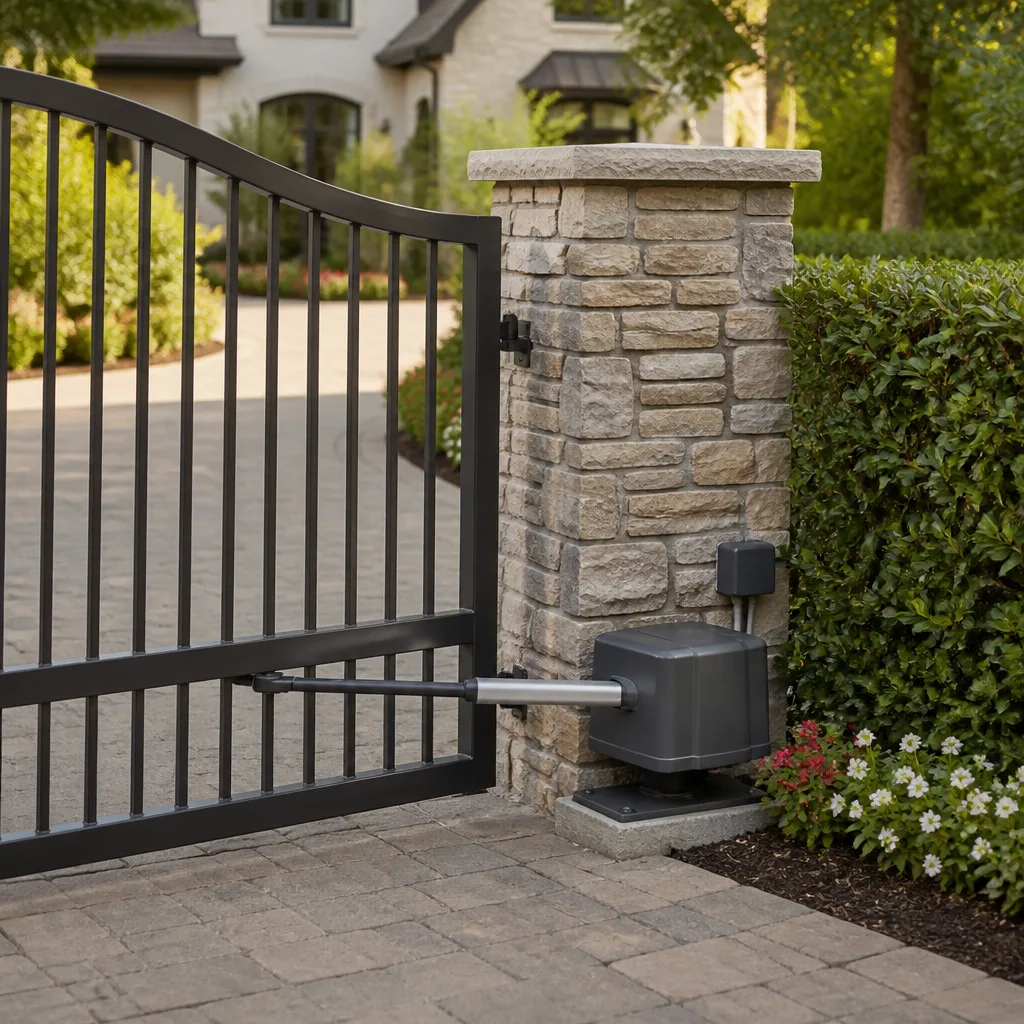 LiftMaster operators
Free on-site gate assessment - hinges, posts, and your LiftMaster or Nice gate operator checked before anything is quoted
The assessment is free and the quote is the invoice.
Get your free estimateGate Repair Permits, Codes & Inspections in NV: What You Need to Know
Here’s something that surprises most Las Vegas homeowners: a contractor can replace your gate motor tomorrow morning, hand you an invoice, and drive away without ever mentioning that the job needed a Clark County permit. Six months later, if that gate closes on a delivery driver’s leg, your homeowner’s insurance carrier can deny the entire claim because the work was never permitted. That’s not a hypothetical. We’ve watched unpermitted gate work surface in home sales, insurance investigations, and HOA disputes across the Las Vegas Valley for over 15 years. This guide explains exactly when gate repair triggers a permit in Nevada, what codes apply, how inspections work, and how to protect yourself before you ever sign a work order. We’ll also show you the 90-second online lookup that confirms whether your contractor actually pulled the permit they charged you for.
Styles & brands we work with
Quick Answer
A like-for-like gate repair in Las Vegas, such as replacing a broken hinge, welded seam, or keypad, typically requires no permit. But replacing a gate motor, adding a new operator, relocating a gate, or installing a new access system generally triggers a Clark County or City of Las Vegas building permit, along with compliance with UL 325 safety standards. Skipping the permit can void an insurance claim, complicate a home sale, and leave you personally liable if the gate injures someone.
Table of Contents
- Repair vs. Alteration: The Permit Threshold in Clark County
- City of Las Vegas vs. Clark County: Whose Rules Apply
- UL 325: The Safety Standard Behind Gate Operator Code
- How HOA CC&Rs Layer on Top of Municipal Code
- How to Confirm a Permit Was Pulled: The 90-Second Lookup
- Unpermitted Gate Work and Nevada Home Sale Disclosures
- What a Clark County Gate Inspection Actually Covers
- How to Retroactively Correct Unpermitted Gate Work
- Common Mistakes to Avoid
- When to Call a Professional
- Frequently Asked Questions
- The Bottom Line
Repair vs. Alteration: The Permit Threshold in Clark County
The single most important distinction in Nevada gate work is the line between a repair and an alteration. Clark County and the City of Las Vegas both draw this line using the International Residential Code as a baseline, but the practical rule is simple: if you’re restoring the gate to its original condition with equivalent parts, it’s a repair and no permit is required. If you’re changing what the gate is, what it does, or how it’s powered, it’s an alteration and a permit is required.
Here’s how that plays out in the real world:
- No permit needed: replacing a bent hinge with a same-size hinge, re-welding a cracked frame joint, swapping a worn gate wheel, replacing a broken keypad with a like-for-like model, or installing a new battery in an existing gate motor.
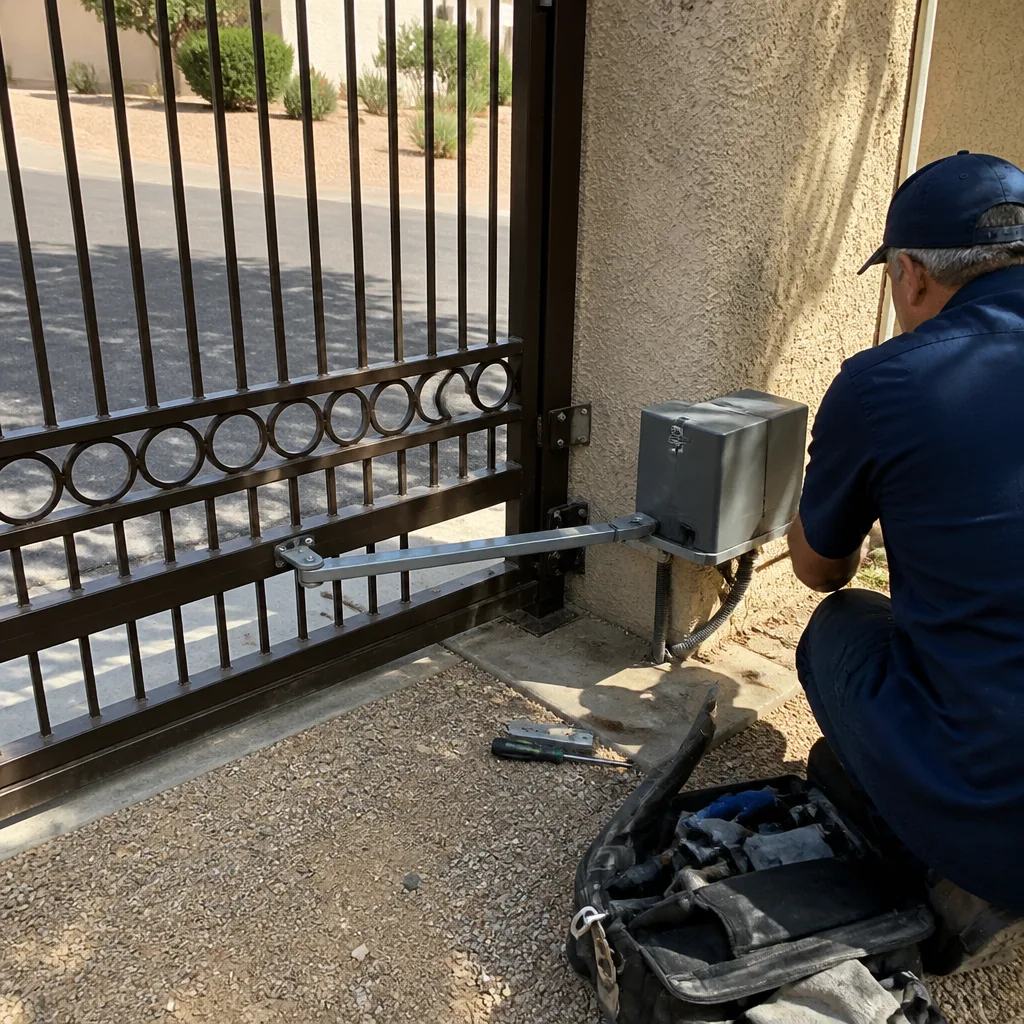
- Permit required: replacing a gate motor or operator, even if the new one is the same brand; adding an automatic opener to a gate that was previously manual; relocating a gate opening; changing a swing gate to a slide gate; adding a pedestrian gate where one didn’t exist; installing vehicle detection loops, photo eyes, or safety edges on a gate that lacked them; or upgrading from a 12-volt to a 24-volt system.
Why does replacing a gate motor trigger a permit when replacing a hinge doesn’t? Because a gate motor introduces force. The standard at the center of this is UL 325, the national safety standard for automatic gate operators, which we cover in detail below. The permit process exists to verify that the new operator meets those safety requirements, including entrapment protection devices and proper force settings. In Las Vegas, where automatic driveway gates are common in neighborhoods like Summerlin, Henderson, Southern Highlands, and The Lakes, the motor replacement is the permit trigger we see overlooked most often.
If you’re doing this work without a permit and the work is purely cosmetic (paint, trim, a new keypad cover), you’re within your rights. If the work involves the motor, the control board, or the operator arm, assume a permit applies until you’ve confirmed otherwise with the local building department. Remember that our team at Warden Gate Repair Las Vegas home can tell you whether your specific work requires a permit during a free phone consultation.
City of Las Vegas vs. Clark County: Whose Rules Apply
Nevada gate permits fall under whichever jurisdiction your address sits in. If you live within Las Vegas city limits, the City of Las Vegas Building and Safety Department handles your permit. If you live in unincorporated Clark County, which includes much of the Las Vegas Valley, Spring Valley, Enterprise, and Paradise, Clark County Building Department is your authority. Henderson and North Las Vegas have their own building departments with similar but independently administered rules.
The good news is that both the City of Las Vegas and Clark County follow the same core standard for gate operators: UL 325. The differences come down to process, fees, and inspection scheduling:
- Clark County typically processes gate permits through its building department’s online portal. The fee schedule for a residential gate operator permit is generally in the range of $100 to $250, depending on the valuation of the work and whether electrical work is included.
- City of Las Vegas operates on a similar valuation-based fee structure. Expect roughly the same range, with additional fees if the job requires an electrical sub-permit, which a motor installation often does.
- Electrical sub-permits: in both jurisdictions, adding or extending a power circuit to a gate operator usually triggers an electrical permit. Some contractors try to avoid this by plugging the operator into an existing outdoor outlet with an extension cord. That violates code and fails inspection every time in Las Vegas, where the hot, dry climate makes improper outdoor electrical work especially dangerous.
We strongly recommend that any gate motor work in Las Vegas include a hardwired power run with proper conduit and a dedicated breaker. That’s what code inspectors look for, that’s what passes, and that’s what won’t fail or arc in a summer monsoon. If you’re unsure which jurisdiction covers your address, you can check your property tax record or simply ask your contractor to confirm in writing which building department issued your permit. No permit number, no job started. That’s the rule.
UL 325: The Safety Standard Behind Gate Operator Code
UL 325 is a national product safety standard for gate operators and other barrier operators, and it is the technical backbone of every Nevada gate permit. Its core requirement is entrapment protection: the gate must reverse or stop when it encounters a person, vehicle, or object, and it must do so with enough sensitivity to prevent serious injury. In Las Vegas, where automatic gates are common on both residential and commercial properties, UL 325 compliance is the difference between a gate that is safe and a gate that is a liability.
The standard divides gate operators into four usage classes, and the class stamped on your motor determines what safety devices are required:
- Class I: residential use only, single-family homes.
- Class II: commercial or multi-family use, limited to authorized vehicles.
- Class III: commercial or industrial use, general public access.
- Class IV: restricted access, high-security industrial sites.
For Class I residential gates, UL 325 requires at minimum a primary entrapment protection device, which is usually a set of photo eyes (safety beams that detect an obstruction) or a contact edge (a pressure-sensitive strip on the gate’s leading edge), plus a secondary protection feature, typically the operator’s built-in force-limiting system that reverses on contact. Every gate motor we service from Linear, Viking, and DoorKing is engineered to meet these standards, but the installation has to be done correctly for the safety system to function.
Here’s what a Clark County or City of Las Vegas inspector actually checks on a gate operator install:
- Photo eyes mounted at the correct height (typically 6 to 12 inches above grade) and aligned so the beam is continuous across the gate opening.
- Contact edges, if used, installed along the full length of any potential pinch points on the gate.
- Force settings tested with a force gauge to confirm the operator reverses before exceeding the UL 325 maximum force threshold.
- Warning signage present on both sides of a vehicle gate, warning against allowing children to play on or operate the gate.
- Hardwired power connection, properly grounded, with no exposed wiring or extension cords.
One fact that spares a lot of Las Vegas homeowners real heartache: UL 325 is not optional because it’s not just a product standard, it’s referenced directly into the International Residential Code, which Nevada adopts. That means a gate operator without UL 325 listing cannot be legally installed in Nevada, period. If a contractor quotes you a no-name motor that seems like a bargain, ask for the UL 325 listing and the usage class. If they can’t produce it, walk away. We have seen too many homeowners in the Las Vegas area buy a cheap operator online, only to learn at inspection that it was never listed for residential use in the United States.
How HOA CC&Rs Layer on Top of Municipal Code
Here’s the catch that surprises most Las Vegas homeowners: even after you pull your city or county permit and pass inspection, your HOA can still require its own separate approval process. Most master-planned communities in the Las Vegas Valley, including Summerlin, Inspirada, Mountains Edge, and The Ridges, have CC&Rs (covenants, conditions, and restrictions) that regulate gate appearance, color, height, material, and even the type of operator you can install.
These HOA requirements sit on top of municipal code. The city cares whether your gate is safe. The HOA cares whether it matches the community aesthetic. You need both approvals, and one does not substitute for the other.
What you might encounter in a typical Las Vegas HOA:
- An architectural review application that must be submitted and approved before any work that changes the gate’s appearance, including color, material, or design.
- Restrictions on gate height (commonly capped at 6 feet in many communities) even if a taller gate would be legal under municipal code.
- Approved color palettes for metal gates, typically limited to black, bronze, or specific powder coat finishes.
- Restrictions on automatic operator arms, particularly in communities with limited setbacks, where a swing gate operator arm might be disallowed in favor of a slide gate operator.
- Mandatory use of licensed and bonded contractors who can show proof of insurance naming the HOA as an additional insured.
Here’s the sequence that avoids fines and rework, and it’s the same order we recommend to every customer: check your HOA CC&Rs first, get architectural approval in writing, then submit the permit application to the city or county, then complete the work, and finally request inspection. If your contractor tells you the HOA approval isn’t necessary because the city permit covers everything, they are wrong, and you’ll be the one paying to repaint or re-engineer the gate when the HOA sends a violation notice. We’ve watched a Summerlin homeowner pay twice for a gate motor installation because no one checked the HOA’s operator restrictions before the work started. Las Vegas HOAs are enforceable contract provisions, not suggestions.
How to Confirm a Permit Was Pulled: The 90-Second Lookup
You do not need to take a contractor’s word that a permit was pulled. Both Clark County and the City of Las Vegas maintain public online permit databases that you can search by address, and checking takes less than two minutes. This is the single best thing you can do to protect yourself before you pay the final invoice.
Here’s how to do it in either jurisdiction:
- Identify your jurisdiction: if your mail says Las Vegas and you’re inside city limits, you use the City of Las Vegas building records portal. If you’re in unincorporated Clark County, you use the Clark County building permit search tool. Not sure? Your property tax bill or your water bill will name the service authority.
- Navigate to the building department’s online records or “citizen access” portal and select permit search by address.
- Enter your street number and street name, without the direction or street suffix (for example, “2450 Desert Rose” not “2450 N Desert Rose Ave”).
- Look for a permit with a type matching “gate” or “electrical” or “building alteration,” with a status of “issued” or “permit active” and a date matching the contractor’s stated start date.
- If you see no gate permit, or if the only matching permit is a general electrical permit without any gate reference, ask the contractor for the permit number. If they can’t provide it within one business day, do not proceed.
This lookup exists for exactly this reason: homeowners get burned by contractors who charge a permit fee and then never file the paperwork. When that happens, the homeowner is the one who gets the stop-work order from the inspector, and the homeowner is the one who gets the notice of violation attached to the property record. In Las Vegas, where real estate transactions move fast and disclosure requirements are strict, an open code violation on a property can delay a closing by weeks.
If you’ve already had work done and want to check whether a permit was pulled retroactively, the same lookup works. Enter your address and review every permit associated with your property for the relevant time period. If you didn’t pull one and your contractor says they did, now you’ve got a receipt, or you’ve got a problem to take up with the contractor and the Nevada State Contractors Board. This 90-second check is part of what you’re paying for when you hire a contractor who operates like the Gate Repair in Las Vegas companies that book work the right way: licensed, permitted, and documented.
Unpermitted Gate Work and Nevada Home Sale Disclosures
Nevada is a disclosure state, and that means when you sell a home in Las Vegas, you are legally required to disclose known defects and unpermitted work to the buyer. Automatic gate work falls squarely into this requirement. If you had a gate motor replaced without a permit, and you sell the home without disclosing it, the buyer can come back after you, sometimes years later, with a misrepresentation claim.
What that looks like in practice:
- NRS 113.130 (the Nevada Seller’s Real Property Disclosure form) includes specific questions about additions, alterations, and improvements. A gate operator installation qualifies as an alteration. If you check “no” and the buyer later finds unpermitted gate work, they have a claim.
- Title companies and lenders increasingly request permit histories during escrow. An unpermitted gate motor may not kill a deal outright, but it can delay closing while the buyer demands a credit or a retro-permit.
- Home inspectors in the Las Vegas market are trained to look for exactly this: gate operators that are newer than the last permitted alteration, photo eyes that appear aftermarket, electrical wiring that doesn’t match the home’s original permit footprint.
If you know or suspect your gate work is unpermitted and you’re preparing to sell, you have options. The most common is to retroactively permit the work before listing, which we cover in the next section. The second is to disclose it and offer the buyer a credit at closing, which is honest but puts money on the table. The third and worst option is to say nothing and hope, which is how a routine sale turns into a Nevada real estate attorney’s case file.
Buyers, of course, should run the same 90-second permit lookup before signing a purchase agreement. We’ve seen unpermitted gate work show up in home sales across the Las Vegas Valley, from Centennial Hills to Green Valley Ranch, and the pattern is always the same: the seller didn’t know, the buyer’s inspector found it, and the deal got worse for everyone at the negotiating table.
What a Clark County Gate Inspection Actually Covers
Once the permit is issued and the work is done, the building department sends an inspector to your Las Vegas property to verify the installation. The inspection is not a casual walk-through. It’s a technical review of the gate and operator against the specific requirements of UL 325 and the applicable electrical code.
Here’s what an inspector will test and examine on a typical automatic gate installation in Las Vegas:
- Entrapment protection: photo eyes are present, aligned, mounted at the correct height, and functional. Contact edges, if used, are continuous and properly wired.
- Force settings: the operator reverses or stops when it encounters an obstruction, tested with a force gauge against UL 325 maximums.
- Electrical work: proper conduit, grounding, and a dedicated circuit. No extension cords, no exposed wire nuts, no unboxed splices. In Las Vegas’s extreme heat, exterior electrical components are also checked for proper weatherproofing.
- Warning signs: UL 325-compliant signs installed on both sides of an automatic vehicular gate. This is one of the most commonly missed items, and it fails inspections regularly.
- Gate operation: the gate travels smoothly through its full range without binding, scraping, or stalling.
If the inspection fails, the inspector issues a correction notice, and the contractor has a set window to fix the issue and schedule a re-inspection. Re-inspection fees vary by jurisdiction, but they’re typically in the $75 to $150 range in Clark County and the City of Las Vegas. A competent contractor anticipates the inspection requirements before the work begins, installs everything to code the first time, and budgets for a clean pass. If you’re hiring someone for Electric Gate Repair in Las Vegas that involves a motor or operator, ask whether the quoted price includes permit filing and the first inspection. Ours always does.
How to Retroactively Correct Unpermitted Gate Work
If you discover that your Las Vegas gate work was done without a permit, whether you inherited it from a previous owner or had a contractor skip the step, the fix is called retro-permitting or “permit after the fact.” The process is more involved than pulling a permit upfront, but it’s far from impossible, and it’s dramatically better than waiting for a code enforcement notice or a failed home inspection during a sale.
Here’s the step-by-step:
- Document what you have: take clear photos of the gate, the operator, the photo eyes or contact edges, the electrical connection, and any warning signs. Note the brand and model of the operator, its usage class (Class I, II, III, or IV), and its approximate installation date.
- Contact the building department: explain that the work was completed without a permit and request a retroactive permit application. You’ll pay the permit fee, typically at a higher rate than an original filing, sometimes with a penalty multiplier.
- Bring the installation up to current code: this is the part that surprises people. A retro-inspection applies current code, not the code in effect when the work was done. If your gate was installed in 2010 and UL 325 has since changed the required photo eye height, you may need to reposition or add devices to pass.
- Schedule and pass the inspection: once the work is verified compliant, the inspector signs off and the permit is closed. The property record now shows permitted, inspected work, which clears the disclosure issue and protects your insurance position.
We’ve helped Las Vegas homeowners navigate retro-permitting on gates that ranged from a simple motor swap to a full slide gate conversion. The most common issue is an operator that was installed without proper photo eyes because the original contractor simply skipped the safety devices to save a few hundred dollars. Fixing that, pulling the permit, and passing inspection is the only way to restore the property’s clean permit history. It’s the same standard we apply to every repair we complete: if the job includes a motor, the permit is part of the job.
Common Mistakes to Avoid
- Assuming a motor replacement is a “repair” and skipping the permit. Replacing a gate motor or operator is an alteration in Clark County and the City of Las Vegas, not a repair, and it requires a permit. This is the single most common unpermitted gate issue we encounter in Las Vegas.
- Buying a cheap operator online without checking for a UL 325 listing. Off-brand operators without a UL 325 listing cannot legally be installed in Nevada, and they will not pass any inspection. You’ll also struggle to find a reputable contractor willing to install one.
- Ignoring HOA review requirements. In communities like Summerlin and Mountains Edge, an HOA can require its own architectural approval before gate work, even if you already have a city permit. Skipping that step leads to violation notices and fines.
- Paying the permit fee on the invoice but never confirming the permit was pulled. Contractors sometimes pocket the fee and skip the filing. The 90-second online lookup is your protection, and you should run it before paying the final bill.
- Running electrical to the gate with an extension cord or surface wiring. Outdoor electrical work in Las Vegas must be in code-compliant conduit with weatherproof connections. Extension cords and exposed splices fail inspection and are a fire risk in the extreme heat.
- Not requesting permit history during a home purchase. Buyers in Las Vegas who skip the permit lookup before closing can inherit someone else’s unpermitted gate work, and then own the problem when they sell or file an insurance claim.
- Hiring a general contractor who isn’t a gate specialist. Gate operators have their own code section, their own inspection standards, and their own failure modes. A general contractor who installs one gate a year is not the same as a specialist who works on Gate Motor Repair in Las Vegas day in and day out.
When to Call a Professional
Any gate repair that involves the motor, the operator arm, the control board, or the electrical supply is a job for a licensed professional who understands Clark County and City of Las Vegas permitting requirements; see our step-by-step guide to hiring a gate repair contractor in Las Vegas for what to look for. That’s not gatekeeping; it’s physics and liability. Gate operators apply substantial force, and the difference between a correctly installed UL 325-compliant system and a sloppy install is the difference between a gate that reverses on contact and a gate that injures someone. In Las Vegas, where summer temperatures can hit 115 degrees and electrical components are under constant thermal stress, the margin for error is slimmer than in most of the country.
You should also call a professional if the gate is sagging, binding, or making grinding noises at any point in its travel, if the photo eyes are misaligned or the operator is reversing erratically, or if the keypad or access control system is failing. These are symptoms that point to bigger problems, and correcting them while they’re small is cheaper than waiting for a full operator failure; our Gate Repair Warning Signs guide for Las Vegas homeowners covers what to watch for. Warden Gate Repair Las Vegas offers free estimates in Las Vegas for permitted gate and motor work. Call (725) 529-9468 and we’ll tell you whether your job needs a permit, what it will cost, and exactly who will be at your door.
Frequently Asked Questions
Yes. Replacing a gate motor or operator is classified as an alteration under Clark County and City of Las Vegas building code, not a like-for-like repair, and it requires a building permit plus an electrical permit if the power circuit is modified. The permit confirms that the new operator meets UL 325 safety standards. Call (725) 529-9468 and we’ll confirm whether your specific motor replacement requires a permit and quote the full job including permit filing.
A residential gate operator permit in Clark County typically runs between $100 and $250, based on the declared valuation of the work, and an electrical sub-permit, when required, adds to that total. The City of Las Vegas charges a similar range. Your contractor should itemize permit fees on the written estimate, and you should verify the permit was actually filed before paying. Call (725) 529-9468 for an exact quote for your specific gate work, permit fees included.
No. Nevada requires that any automatic gate operator installation, including a DIY install, be permitted and inspected through the City of Las Vegas or Clark County, and the operator must carry a UL 325 listing for the appropriate usage class. A homeowner who installs an unpermitted gate operator takes on full personal liability if the gate injures someone. Our recommendation is to have a licensed gate specialist handle the install and the paperwork; call (725) 529-9468 for a free estimate.
UL 325 is the national safety standard for automatic gate operators, and Nevada adopts it by reference into the International Residential Code. It requires entrapment protection devices such as photo eyes or contact edges and sets maximum force limits for gate operation. A gate operator without a UL 325 listing cannot legally be installed in Nevada. Every operator we install from brands like Linear, Viking, DoorKing, and Ghost Controls is UL 325-listed for its usage class.
Yes. If an unpermitted gate alteration is found to be the cause of a personal injury or property damage claim, your homeowner’s insurance carrier has grounds to deny the claim on the basis that the work was never inspected for code compliance. This is one of the most expensive consequences of skipping a $150 permit, and few Las Vegas gate contractors explain it before doing the work. Permitted work, by contrast, carries the code compliance record that insurance companies expect.
Both Clark County and the City of Las Vegas maintain public online permit lookup tools that allow you to search your address and view every permit associated with the property. If you don’t see a gate or electrical permit matching your contractor’s work dates, ask for the permit number directly. A legitimate contractor provides it immediately. Run the lookup before you pay the final invoice, and if the permit was never filed, you’re entitled to a refund of the permit fee you paid.
The Bottom Line
Gate repair permits in Nevada are not bureaucratic red tape. For more guides & resources on protecting your property, They’re the mechanism that verifies your automatic gate meets UL 325 safety standards, protects your homeowner’s insurance position, and keeps your property’s permit history clean for future sale. A like-for-like repair stays permit-free. A motor replacement, operator addition, or access control upgrade needs a permit, an inspection, and proper safety devices. If you live in a Las Vegas HOA community, you also need architectural approval before the work begins. The 90-second permit lookup is free insurance against contractors who charge for permits they never file. When you’re ready for gate work done the permitted way, Warden Gate Repair Las Vegas is one call away at (725) 529-9468.
Written by Cole Rafferty, Owner at Warden Gate Repair Las Vegas, serving Las Vegas since 2008.
See the difference
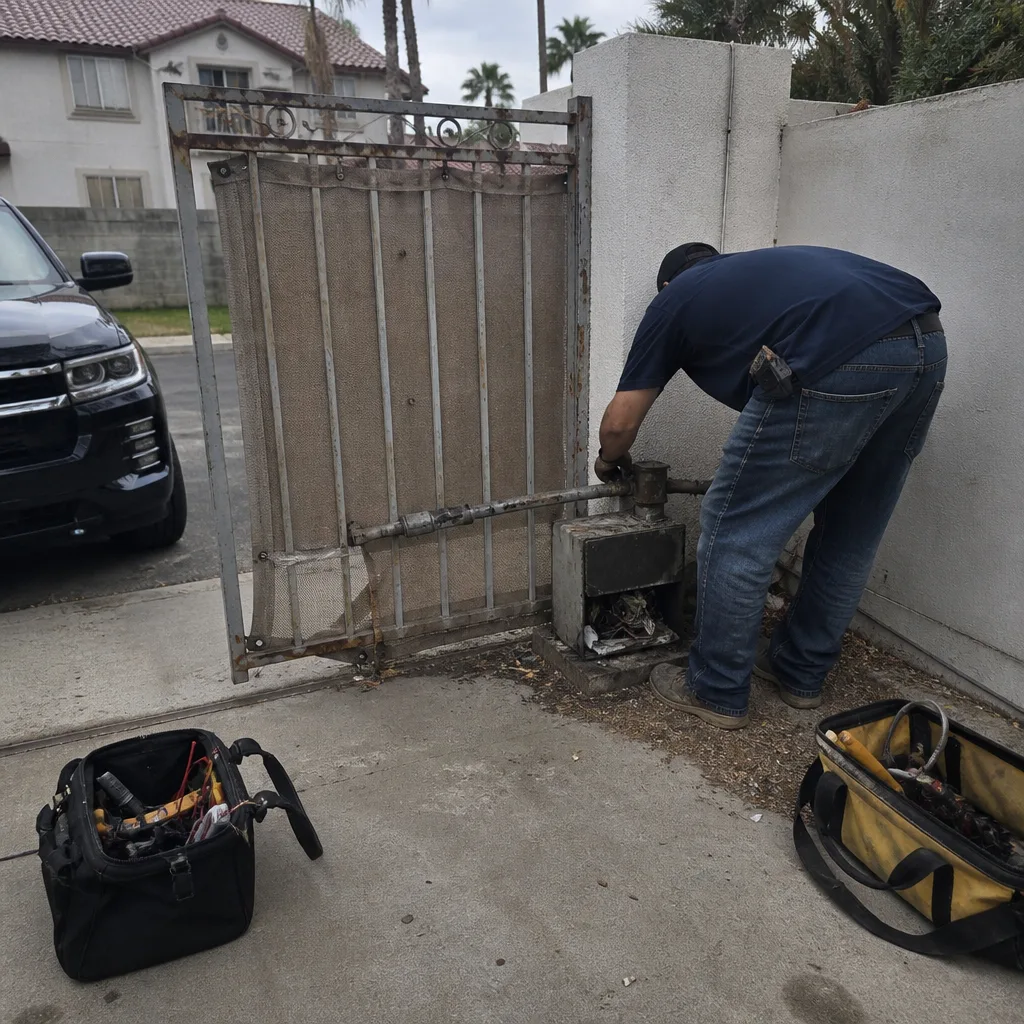 Before
 After
After Before
 After
After Before
 After
After