
Last updated October 16, 2026
 Wrought iron
 Wood & steel frame
 Farm & ranch
 Sliding driveway gates
 LiftMaster operators
Free on-site gate assessment - hinges, posts, and your LiftMaster or Nice gate operator checked before anything is quoted
The assessment is free and the quote is the invoice.
Get your free estimateSeasonal Gate Repair Care for Las Vegas: Year-Round Homeowner’s Guide
Las Vegas monsoon season can push humidity from 5% to 45% in under an hour. That single swing is enough to swell a wooden gate frame, short a safety loop sensor, and pack a LiftMaster slide rail with caliche mud, all in one afternoon. Most homeowners only notice their gate after it fails. This guide maps the actual weather events that damage gates in Las Vegas and the specific care tasks to perform before each one hits, so you’re fixing a $40 part in April instead of a $900 motor in August. We’ve been repairing gates in this valley since 2008, and the failures we see follow a predictable calendar.
Styles & brands we work with
Quick Answer
Seasonal gate care in Las Vegas comes down to three weather windows: pre-summer heat prep in April and May, monsoon hardening in June and July, and winter swing inspection from December through February. A homeowner can handle lubrication, cleaning, and visual checks in under two hours total per season. The highest-value move is one professional inspection each spring, which catches the failures that cost four to six times more when they happen mid-summer or after a haboob.
Table of Contents
- Pre-Summer Heat Prep (April – May): What to Do Before 110°F Arrives
- Monsoon Preparation (June – July): Weatherproofing Before the First Dust Storm
- Post-Monsoon Inspection (September): The Five Components a Haboob Damages
- Winter Temperature Swing (December – February): Tightening Before the Gap Shows
- Annual Professional Inspection vs. Reactive Repair: The Las Vegas Dollar Comparison
- Safety First: What a Homeowner Should Never Attempt
- The Complete Las Vegas Gate Care Calendar
- Common Mistakes to Avoid
- When to Call a Professional
- Frequently Asked Questions
- The Bottom Line
Pre-Summer Heat Prep (April – May): What to Do Before 110°F Arrives
The first 105-degree day of the year is when we start taking emergency calls for gate motors that worked fine in March. Heat does two things to a gate system: it thins out the lubricant inside the motor and gearbox, and it expands the metal in the gate frame itself. When both happen at once, a gate that moved freely in spring starts drawing more amps to swing or slide. More amps means more heat inside the motor. It’s a loop, and it ends with a thermal overload shutdown or a burned winding. This section explains how to prepare before the heat arrives.
Step-by-Step Pre-Summer Gate Checklist
- Apply a heat-rated lubricant to all pivot points, hinges, and the drive chain or rack. Standard lithium grease breaks down around 140°F. A metal gate surface in Las Vegas sun can reach 160°F on a 105-degree day. Use a synthetic or silicone-based lubricant rated for high temperature. On swing gates, hit the hinge pins, the actuator arm, and any idler pulleys. On slide gates, lubricate the drive chain (if it has one), the rail rollers, and the guide wheels. One pass with the right product lasts three to four months through summer.
- Check the gate’s physical alignment while the weather is mild. Put the gate in manual mode (the release handle on the gate motor) and push it open and closed by hand. It should move smoothly with even resistance. If it binds, that bind gets worse in summer when the metal expands. Adjusting alignment in May is a two-hour job. Adjusting it in July when the gate won’t close at all is an emergency call.
- Inspect and replace the weatherstripping on the motor housing and any electrical boxes. Rubber and foam gaskets in Las Vegas dry out and crack from UV exposure. A cracked gasket means dust and insects get inside the motor enclosure, and dust is the enemy of electronics.
- Test the battery backup if your gate has one. Disconnect the gate from wall power (or open the breaker) and cycle the gate using the battery. If it moves slower than normal or fails to complete a cycle, replace the battery before the first summer storm knocks out line power. Battery backups are sized for hundreds of cycles but rarely used until the moment they’re needed, and then they’re dead.
- Apply a UV-protective coating to powder-coated iron gates if the finish shows any chalking or dulling. Powder coating is a baked resin. Las Vegas UV radiation breaks down the resin over five to seven years. You’ll feel a chalky residue when you run a hand across older gates. The coating isn’t cosmetic. Once it fails, the raw steel underneath oxidizes, and rust spreads under the remaining coating. A UV-resistant clear sealant applied in spring buys two to three more years before re-coating is required.
This pre-summer routine takes a homeowner about an hour and a half. It’s the single highest-impact seasonal gate care task in Las Vegas because it removes the conditions that create mid-summer motor failures. Every gate motor repair in Las Vegas that we perform in July and August starts from one of the conditions this list prevents.
What Pre-Summer Maintenance Costs (If You Do It Yourself)
- Heat-rated lubricant (synthetic, high-temp): $14 – $28 per can, enough for two seasons
- UV-protective clear sealant for powder coating: $22 – $45 per quart, covers a standard 12-foot driveway gate
- Battery backup replacement (12V sealed lead-acid, common on Viking and BFT units): $45 – $90 per battery, most gates need one or two
- Weatherstripping and gasket replacement: $8 – $20 for a full motor housing re-gasket
- Total DIY cost: approximately $90 – $180 for all pre-summer tasks
Compare that to the $400 – $900 cost of replacing a gate motor that failed from heat stress. The math favors the April afternoon every time.
Monsoon Preparation (June – July): Weatherproofing Before the First Dust Storm
The Las Vegas monsoon officially runs from June 15 through September 30. In practice, the first haboob usually arrives in early July, and it changes the game for every gate system in the valley. The wind picks up fine gypsum and caliche dust and forces it into every gap, crack, and connector on your gate. Before the first storm, there are specific steps to take.
What Monsoon Dust Does to Gate Systems
Dust kills gate electronics faster than heat. Here’s the sequence we see in our electric gate repair work across Las Vegas every single year. First, fine dust infiltrates the motor control board enclosure. The dust settles on the circuit board. Then the first rain arrives, and the humidity turns that dust into a conductive paste. A conductive paste on a control board creates a short circuit across component legs. The board fails, and the gate won’t respond to remotes or the keypad. This is the most common monsoon-related failure we repair, and it’s almost entirely preventable.
Step-by-Step Monsoon Preparation Checklist
- Weatherproof all sensor housings. The safety photo-eye sensors on either side of the gate opening have small rubber grommets where the wire enters. Those grommets crack in heat. Replace them and run a thin bead of dielectric grease around the wire entry point. On safety loop sensors embedded in the driveway, inspect the caulking around the loop wire where it exits the conduit. Re-caulk any gaps. A loop sensor that shorts during a storm triggers a false “vehicle present” signal, and the gate refuses to close.
- Check the control board enclosure seal. Open the motor housing and inspect the rubber gasket between the lid and the box. If it’s cracked, flattened, or missing, replace it before dust and rain get in. While the lid is off, use a can of compressed air to blow out any existing dust. Don’t use a vacuum; the static can damage components. Don’t use a damp cloth; the moisture is exactly what you’re keeping out.
- Clear the drain holes at the base of the slide rail. Slide gates use a track mounted to the ground. That track collects dust, and the dust mixes with monsoon rain to create a sludge that blocks the drain holes. If water can’t drain, it pools in the track, and pooled water corrodes the rail and the guide wheels. A flathead screwdriver through each drain hole takes ten seconds.
- Apply a dry-film lubricant to the rail channel. This is the monsoons’ gift. If you used a wet lubricant in April’s heat prep, the dust will stick to it and turn it into grinding paste. Switch to a dry graphite or PTFE-based lubricant for the rail and chain. It leaves a slick film that dust can’t adhere to. This one swap prevents more slide gate wear than any other task in this entire guide.
- Anchor anything that can blow into the gate path. Before a storm, walk the gate’s full travel path. Trash cans, potted plants, bicycles, or a neighbor’s patio chair that blows into the gate while it’s cycling will bind the mechanism. Most gates have an obstruction sensor that reverses the gate, but a bind at the wrong moment can strip the drive gear. Our gate repair calls in Las Vegas spike the day after every monsoon storm, and a meaningful share are stripped gears from airborne debris.
Monsoon Prep Costs
- Dielectric grease tube: $7 – $12
- Dry-film graphite or PTFE lubricant: $10 – $18
- Replacement grommets and gaskets: $6 – $15
- Exterior caulk for loop sensor wire entries: $5 – $10
- Total DIY monsoon prep cost: approximately $30 – $55
Post-Monsoon Inspection (September): The Five Components a Haboob Damages
After the last monsoon storm, most homeowners breathe a sigh of relief and ignore their gate until it fails. That’s a mistake. The damage a haboob does is rarely immediate. Dust works its way into bearings and joints, and the degradation compounds over the following three to six months. A gate that survived the storm can fail in November because of what the storm did in August. This section walks through the five components to inspect after the monsoon season ends, and what to look for on each.
- The control board. Open the motor enclosure and look for a fine layer of dust on the circuit board. Even if the gate is working, dust is building a future short. Blow it out with compressed air. Look for any discoloration or bulging capacitors while you’re there. A bulging capacitor is a time bomb; it will fail within weeks or months, and it’s a $25 part that becomes a $300 board replacement when it bursts.
- The limit switches. Limit switches tell the gate motor when to stop. Monsoon dust gets inside the switch housing and causes intermittent contact, which translates to a gate that stops at the wrong position or reverses unexpectedly. Clean the switches with contact cleaner and verify the gate stops at both fully open and fully closed positions. Adjust if needed.
- The safety loop sensors in the driveway. The saw-cut in the concrete where the loop wire runs is sealed with flexible caulk. Haboob-force wind plus rain degrades that caulk. Re-caulk any cracks in the saw-cut. A broken seal lets water into the cut, and Vegas water has a high mineral content that eats through wire insulation. A failed loop sensor is a $300 – $500 replacement.
- The rail and guide wheels on slide gates. Grit that entered during the storm has been grinding against the wheel bearings ever since. Spray the wheels with contact cleaner or brake cleaner to flush the grit, then re-apply dry-film lubricant. Spin each wheel by hand. Any rough feeling means the bearing is compromised. Replacing a $15 wheel now prevents a $200 rail replacement later.
- The gate hinges and actuator arm on swing gates. Dried monsoon mud packs into hinge joints and becomes hard. Cycle the gate and watch for any sticking or resistance. Clean the hinge pins with a degreaser, flush with water, let dry, and re-lubricate with high-temp lubricant. On the actuator arm, check the clevis pins for wear. A worn pin makes the gate sloppy and adds stress to the motor.
Post-Monsoon Inspection: DIY Time vs. Professional Cost
- DIY inspection time: 45 – 60 minutes
- Professional post-monsoon inspection (if you prefer to hand it off): $85 – $150, depending on gate type and access
- Average cost of a failed control board ignored after monsoon: $280 – $600
- Average cost of a failed safety loop ignored after monsoon: $300 – $500
In our experience, about one in four gates we inspect in Las Vegas after monsoon season has at least one component that would have failed within six months. The inspection finds it while it’s still a $25 part.
Winter Temperature Swing (December – February): Tightening Before the Gap Shows
Winter in Las Vegas doesn’t freeze pipes or dump snow, but it does something equally damaging to gates: it swings 30 degrees between overnight lows near 40°F and afternoon highs near 70°F, sometimes 20 degrees per week. That swing causes metal to expand and contract on a daily cycle. Over the course of a Las Vegas winter, those cycles work bolts loose, shift frame alignment, and turn a 1/16-inch gap into a 1/4-inch gap. The damage doesn’t show up as a failure; it shows up as a gate that racks itself out of alignment and a motor that works harder every week.
What to Check in December, January, and February
- Tighten every bolt on the gate frame, hinges, and motor mount. Use a torque wrench where possible. The daily expansion-contraction cycle loosens hardware that hasn’t moved in years. Start at the hinge posts and work outward. A gate with loose hinge bolts will sag, and a sagging gate catches on the ground or the latch, which doubles the motor’s workload. This is the single highest-value winter task.
- Re-check the gate’s closed position. A gate that closed flush in October may show a visible gap at the latch by January. That gap isn’t cosmetic; it means the frame has shifted, and the latch and safety switches are misaligned. If the gate shows daylight at the latch, realign it before the gap grows into a binding condition.
- Inspect the chain or belt tension on slide gates. Cold weather tightens some materials and loosens others. A track chain that was perfectly tensioned in September can develop sag by December. Most chains have an adjustment bolt. A 1/2-inch to 3/4-inch deflection in the center of the chain span is ideal. More than that means the chain can jump the sprocket and leave the gate stuck half-open.
- Check the battery backup and the power supply connections. Battery capacity drops in cold weather. A battery that tested fine in September may deliver 30% less power in January. Test it again mid-winter. Also check all electrical connections for corrosion. The temperature cycling makes wires expand and contract, and a marginally tight connection in summer can become a loose one in winter.
- Lubricate the hinges and pivot points again, even if you did it in October. Lubricant thickens in cold weather, and what was a smooth hinge at 80°F is a resistant hinge at 45°F. A light re-application takes five minutes and keeps the motor from straining on cold mornings.
Winter Maintenance Costs
- No new tools needed if you did pre-summer prep: $0
- Replacement bolts and hardware (if any are stripped or damaged): $5 – $25
- Torque wrench (if you don’t own one): $30 – $60, a one-time purchase
- Total DIY winter cost: $0 – $25 for most homeowners
Annual Professional Inspection vs. Reactive Repair: The Las Vegas Dollar Comparison
There’s a data pattern we’ve observed across thousands of Warden Gate Repair Las Vegas home visits since 2008: homeowners who schedule one professional inspection per year pay less, in total, than homeowners who wait for a failure. This isn’t a scare tactic. It’s a straightforward comparison built from the repair records we see.
A Typical Las Vegas Gate Without Preventive Care
- Year 1: Gate works. Lubrication dries out. Dust accumulates on the control board. No action taken.
- Year 2: First failure. Usually a control board or a limit switch. Emergency call. Cost: $280 – $600 for the repair, plus the gate was down for one to three days.
- Year 3: The gate motor fails due to accumulated strain from poor lubrication and alignment. Replacement motor: $400 – $900 for the part, plus installation. Total event cost: $600 – $1,300.
- Year 4: Another component fails. The cycle continues. Over five years, a reactive homeowner in Las Vegas spends $1,500 – $3,000 on gate repairs, often with the gate inoperable for days at a time.
A Typical Las Vegas Gate With Annual Professional Service
- Annual inspection cost: $85 – $150 per year
- Small parts replaced during inspection (seals, batteries, worn wheels): $40 – $120 per year in most cases
- Major component failures avoided: most gates serviced annually go five to seven years without a motor or control board replacement
- Five-year total cost: $625 – $1,350, with the gate operational the entire time
The comparison isn’t perfect for every gate, and some gates will fail regardless of maintenance. But the pattern holds: preventive care shifts spending from emergency replacement to scheduled maintenance, and the total number is lower. It also removes the experience of discovering your gate won’t open on the morning you’re already late.
A note on pricing: every repair we perform at Warden Gate Repair Las Vegas comes with a written price before any work starts. The price is quoted and agreed before we touch a single bolt, and that price doesn’t change at the end. If you’re comparing your options for a professional inspection, that’s the standard to ask for from any company you call.
Safety First: What a Homeowner Should Never Attempt
Gate systems combine heavy metal, stored mechanical energy, and line-voltage electricity. Some tasks in this guide are safe for a homeowner with basic tools. Others are not, and an honest guide has to draw the line.
Do Not Attempt These Tasks Yourself
- Opening a gate motor housing and working on anything connected to line voltage. A gate motor draws 110V or 220V. Even with the breaker off, the capacitor inside can hold a charge. This is not a light switch or an outlet replacement.
- Adjusting or replacing a torsion spring on a swing gate. Some heavy swing gates use torsion springs, which store enormous energy. A spring that releases while you’re working on it can cause serious injury.
- Replacing or re-tensioning a chain on a slide gate while the gate is under load. The chain carries the full weight of a gate that can weigh 600 pounds or more. If the gate shifts while the chain is disconnected, it will roll or slide on its own.
- Working on the safety sensors while the gate is powered. The photo-eyes and loop detectors control the gate’s safety reversal. If you disconnect or misalign them, the gate will not stop when it should, and a gate that doesn’t stop is a serious hazard to people and pets.
- Any repair where the gate is the only thing holding back a vehicle or pedestrian path. If your gate separates your property from a busy Las Vegas street, a failed repair isn’t an inconvenience. It’s a safety gap. Call a professional gate repair service in Las Vegas for anything that affects the gate’s closing integrity.
If you’re unsure whether a task is safe, err on the side of calling. A professional gate technician in Las Vegas carries the right training, the right tools, and the right insurance for this work.
The Complete Las Vegas Gate Care Calendar
Here’s the whole year on one page. If you follow this schedule, you’ll be ahead of every failure mode the Las Vegas climate can throw at a gate.
January – February
- Tighten all gate frame, hinge, and motor mount bolts
- Check chain/belt tension on slide gates
- Test battery backup in cold conditions
- Re-align the gate if a latch gap has developed
March
- Light inspection month; check for any winter movement
- Clean debris from the gate track and opening
- Schedule professional annual inspection if you have not already
April – May
- Apply heat-rated lubricant to all pivot points and drive components
- Check gate alignment in manual mode
- Inspect and replace motor housing weatherstripping
- Test battery backup under load
- Apply UV-protective coating to powder-coated iron gates
June – July
- Weatherproof sensor housings and wire entry grommets
- Check control board enclosure seals
- Clear slide rail drain holes
- Switch to dry-film lubricant on rails and chains
- Anchor loose items near the gate path
August
- Mid-monsoon check; blow out any dust that has accumulated
- Verify gate operation after each major storm
- Check safety sensors for proper alignment
September
- Full post-monsoon inspection of the five critical components
- Clean limit switches and verify stop positions
- Re-caulk safety loop saw-cuts
- Flush and re-lubricate rail wheels and hinges
October – November
- Light months; verify gate operation and lubrication
- Re-apply dry-film lubricant if needed
- Begin preparing for winter temperature swings
December
- Re-check bolt torque before the coldest weeks
- Test battery backup one more time before year-end
- Confirm gate alignment and latch engagement
Common Mistakes to Avoid
- Using WD-40 on gate hinges and pivots. WD-40 is a water displacer, not a lubricant. It penetrates and cleans, then evaporates and leaves metal dry. A gate treated with WD-40 in autumn will be grinding by spring. Use a proper high-temp or dry-film lubricant instead.
- Lubricating the slide rail with grease before monsoon season. Grease plus Las Vegas dust equals grinding paste. If you did this, clean the rail thoroughly and switch to a dry-film product before the first storm.
- Ignoring a gate that works, assuming that working means healthy. A gate can run for months with a failing capacitor, a dusty control board, or a worn hinge bearing. The failure arrives when you need the gate most. Working is not the same as healthy.
- Waiting until the gate fails to find a repair company. When your gate is stuck open at 10 PM, you’ll call whichever company answers the phone. That’s how homeowners end up with an anonymous technician and a vague estimate. Find a gate repair company in Las Vegas you trust before the emergency, and ask them what their pricing and vetting process looks like.
- Skipping the battery backup test because the gate has never lost power. Nevada power outages are more common than many homeowners realize, especially during summer thunderstorm season and the winter wind months. A battery that has never been tested is a battery that will not work when tested by an outage.
- Treating the gate’s safety sensors as optional accessories. The photo-eyes and loop detectors are the only thing preventing the gate from closing on a person, a pet, or a vehicle. A gate that runs fine with a disconnected sensor is a gate that will not stop when it should.
- Forgetting that gates are heavy machines. A 12-foot steel driveway gate weighs 400 to 800 pounds. Every component is under load every day. When a 10-year-old gate suddenly fails, it’s not one thing that broke; it’s ten years of unaddressed wear that reached the breaking point at once.
When to Call a Professional
Some gate issues are clear homeowner territory, and some are not. Call a professional when any of these happens: the gate motor hums but the gate doesn’t move, which usually means a stripped gear or a failed capacitor; the gate reverses direction without an obstruction present, which points to a sensor or limit switch failure; you see scorch marks or smell burning near the motor, which is a short or an overload; the gate sags visibly even after bolts are tightened, which means the hinges or frame are compromised; or any time the gate won’t close and secure your property. Warden Gate Repair Las Vegas offers free estimates throughout Las Vegas, and every visit comes with a written price before any work starts. Call (725) 529-9468 when you want a specific answer about your specific gate.
Frequently Asked Questions
Lubricate the pivot points, hinges, and drive chain every three to four months in Las Vegas. The heat accelerates lubricant breakdown, and the monsoon dust contaminates wet lubricants. The schedule that works for most local gates is: high-temp lubricant in April, dry-film lubricant in July, a flush and re-apply in September after the monsoon ends, and a light re-application in December before winter temperature swings. Call (725) 529-9468 if you want a recommendation for your specific gate type.
Control board failure caused by dust infiltration is the most common post-monsoon repair we see. Fine dust enters the motor enclosure through degraded gaskets, settles on the circuit board, and becomes conductive when humidity rises. A new control board costs $280 – $600 installed depending on the gate motor brand. The failure is preventable with a $10 gasket replacement before the monsoon season starts.
A professional gate inspection in Las Vegas typically costs $85 – $150 for a standard residential swing or slide gate, depending on access and gate type. At Warden Gate Repair Las Vegas, the written price is provided before the inspection is performed, and that written price is what you pay. If the inspection finds a problem, the repair is quoted separately and agreed to before any work starts.
You can do most of the seasonal maintenance tasks in this guide yourself, including lubrication, cleaning, visual inspection, and bolt tightening. You should not attempt any work involving line voltage, torsion springs, chain re-tensioning under load, or safety sensor wiring. If you’re comfortable with basic tools and follow the safety boundaries in this guide, you can handle roughly 80% of seasonal gate care and call a professional for the rest.
A gate motor in Las Vegas typically lasts five to eight years with proper seasonal maintenance, and two to four years without it. The heat, monsoon dust, and temperature swings in this climate are harder on motors than almost any other U.S. market. FAAC and Viking motors tend to run cooler than some competitors, but all brands benefit from the same seasonal care routine.
Yes. Our technicians are factory-trained on gate motor repair for BFT and Linear systems, along with FAAC, Viking, LiftMaster, Ghost Controls, DoorKing, Elite, and Mighty Mule. The right parts and the right knowledge arrive together, which means your repair is done correctly the first time and backed by a written guarantee.
The Bottom Line
Las Vegas doesn’t have four seasons; it has three gate-damaging weather events, and each one has a specific set of prevention tasks. Summer heat calls for heat-rated lubricant, battery testing, and UV protection in April and May. Monsoon season calls for sensor weatherproofing, dry-film lubricant, and gasket replacement before the first dust storm in July. Winter temperature swings call for bolt tightening, chain adjustment, and alignment checks from December through February. Each season’s task list takes under two hours and costs under $100 in parts. The alternative is an emergency repair that costs four to six times more, always at the worst possible moment. Do the preventive work, schedule one professional inspection annually, and your gate will outlast the Las Vegas climate instead of succumbing to it.
If you want help with any of the tasks in this guide, or you’d rather hand the whole thing off, call Warden Gate Repair Las Vegas at (725) 529-9468. You’ll get a live person on the phone, a written price before any work begins, and a technician whose name and photo you’ll know before they arrive.
Written by Cole Rafferty, Owner at Warden Gate Repair Las Vegas, serving Las Vegas since 2008.
See the difference
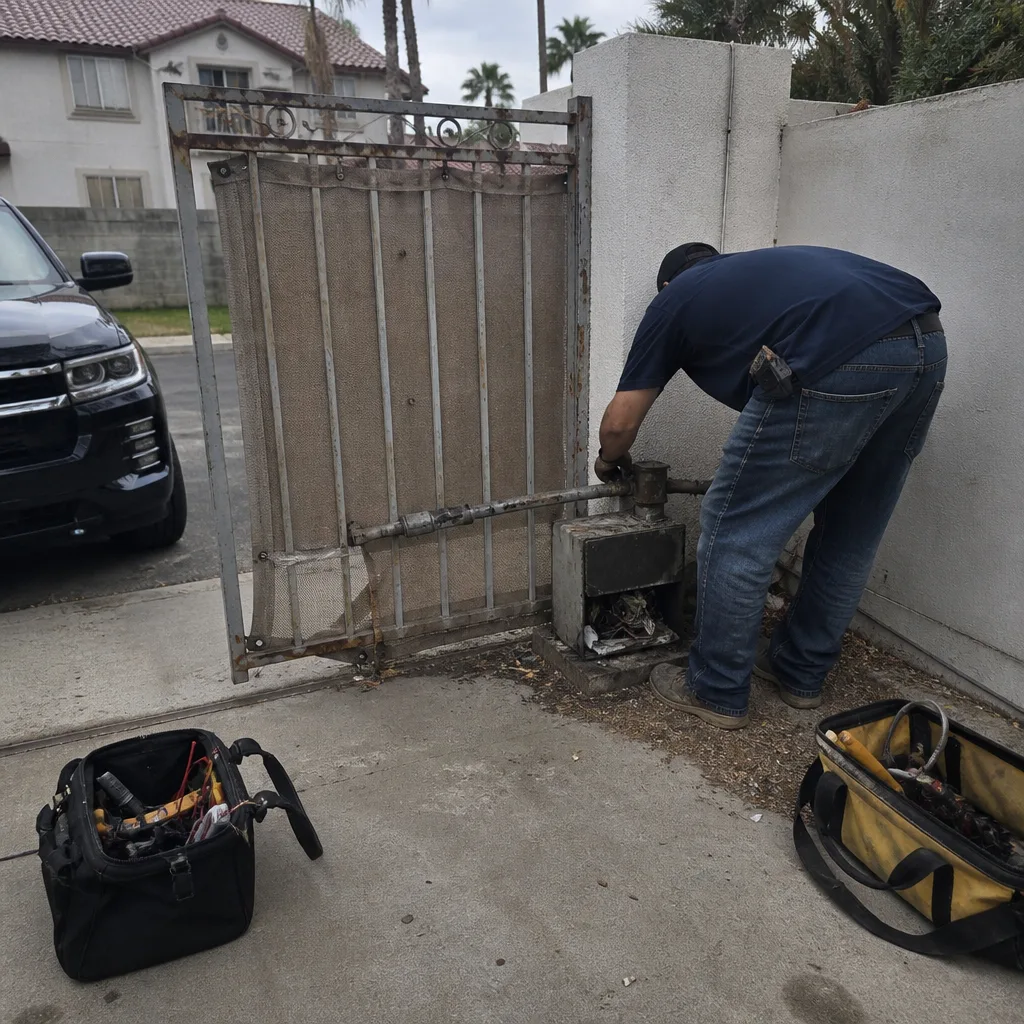 Before
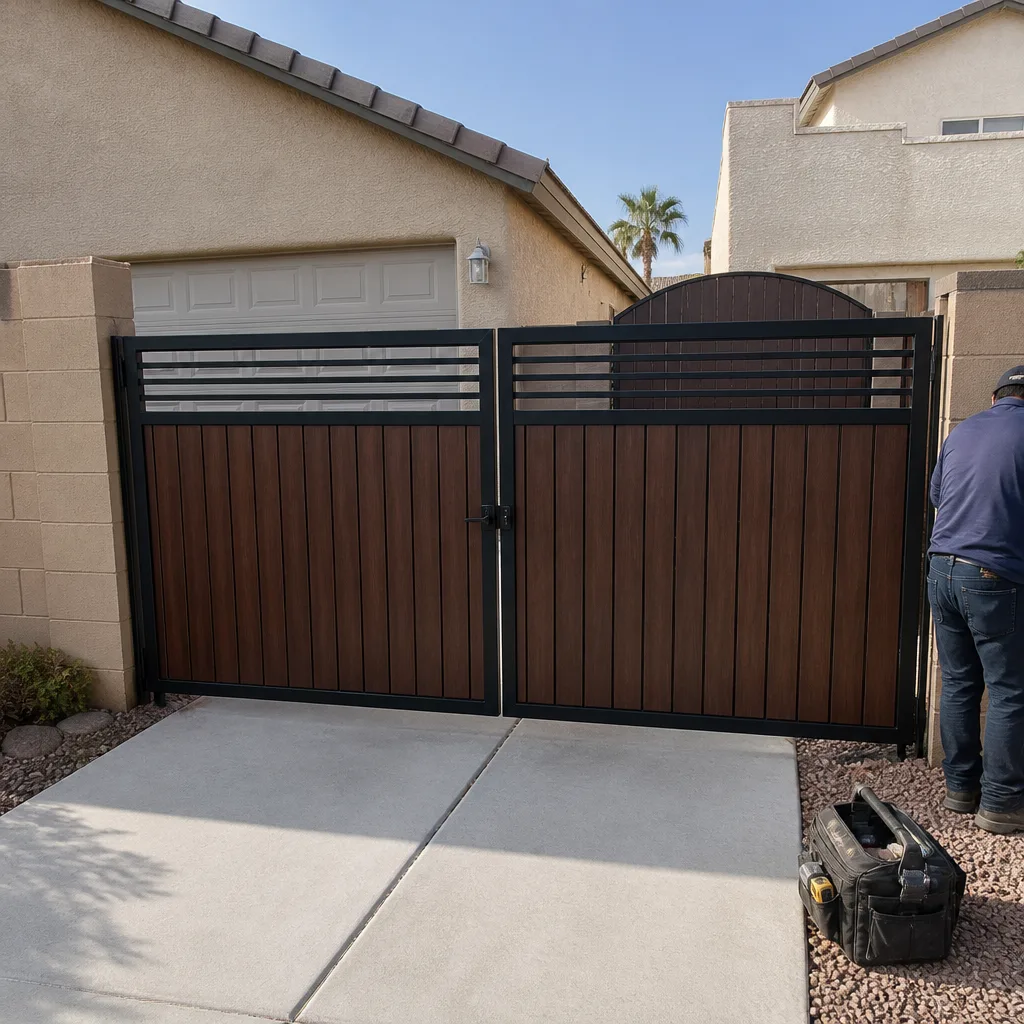 After
After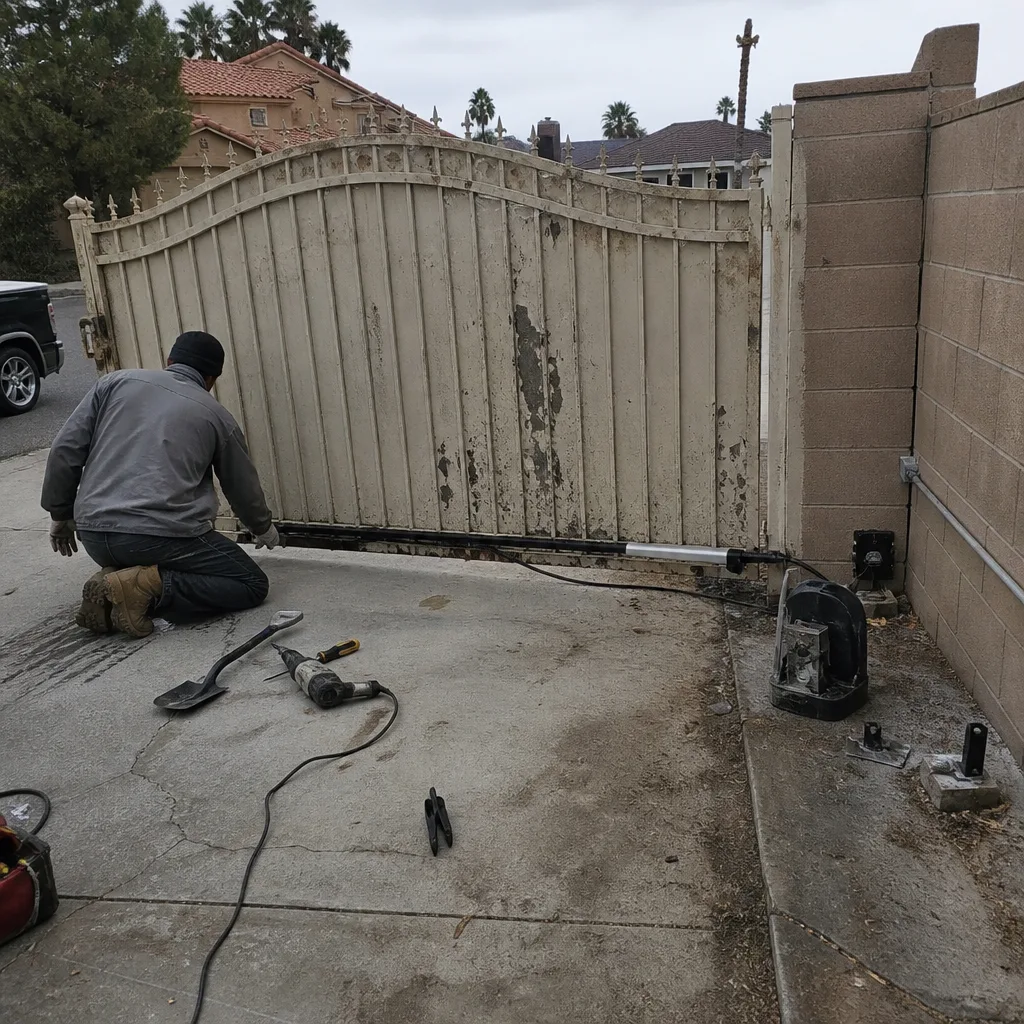 Before
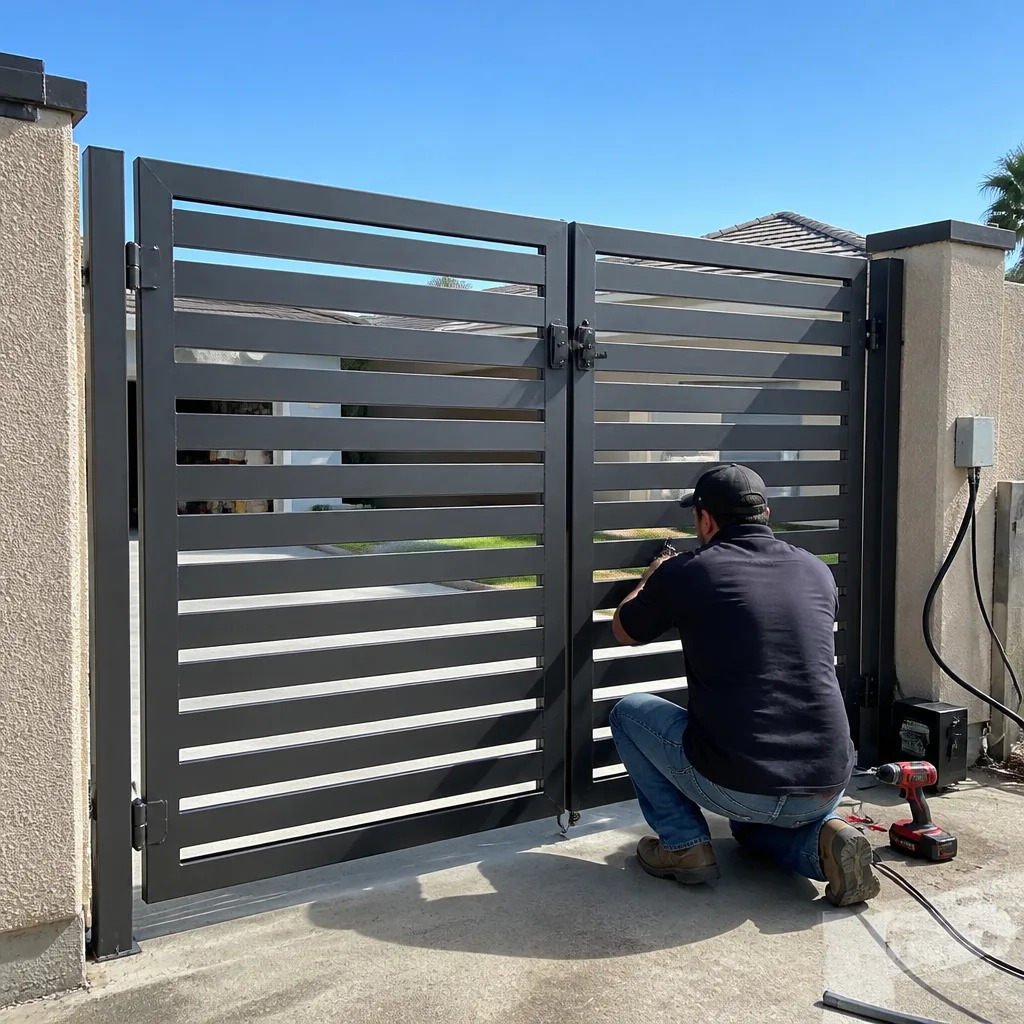 After
After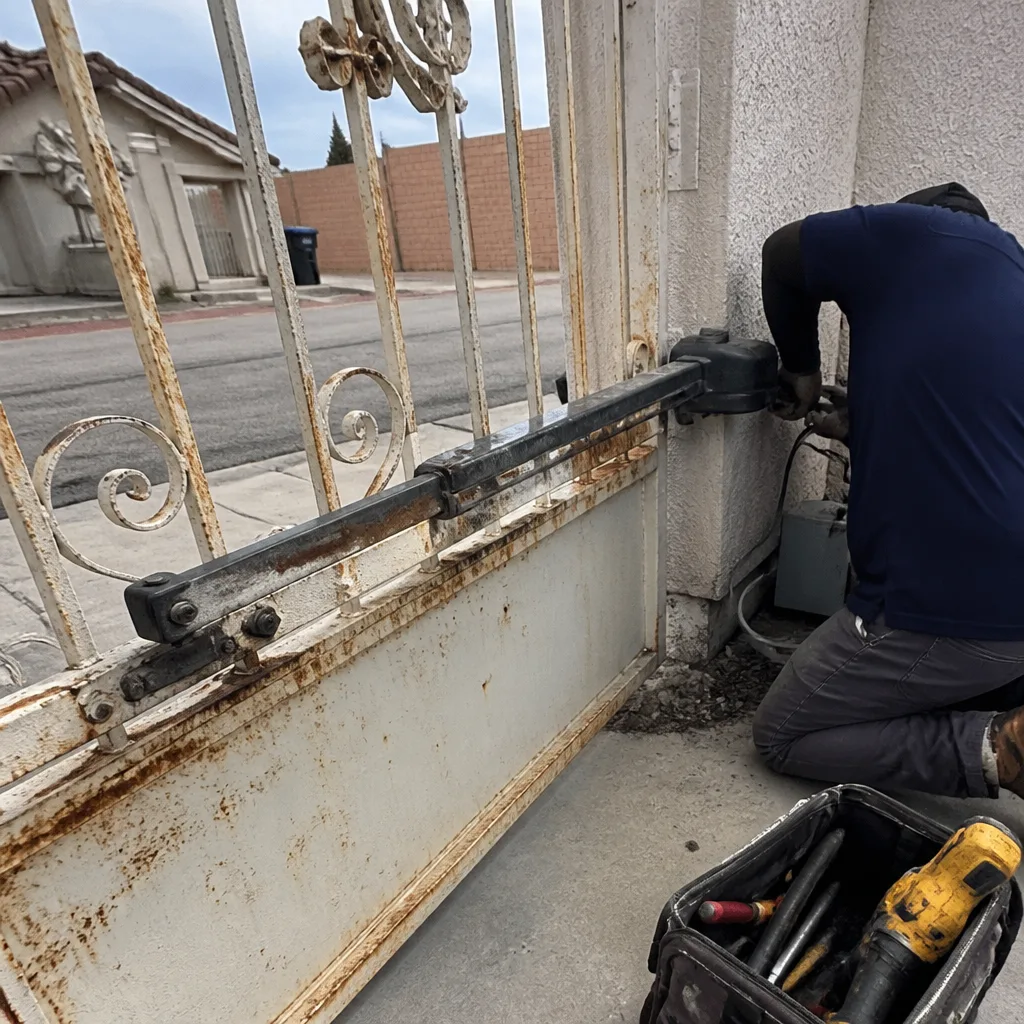 Before
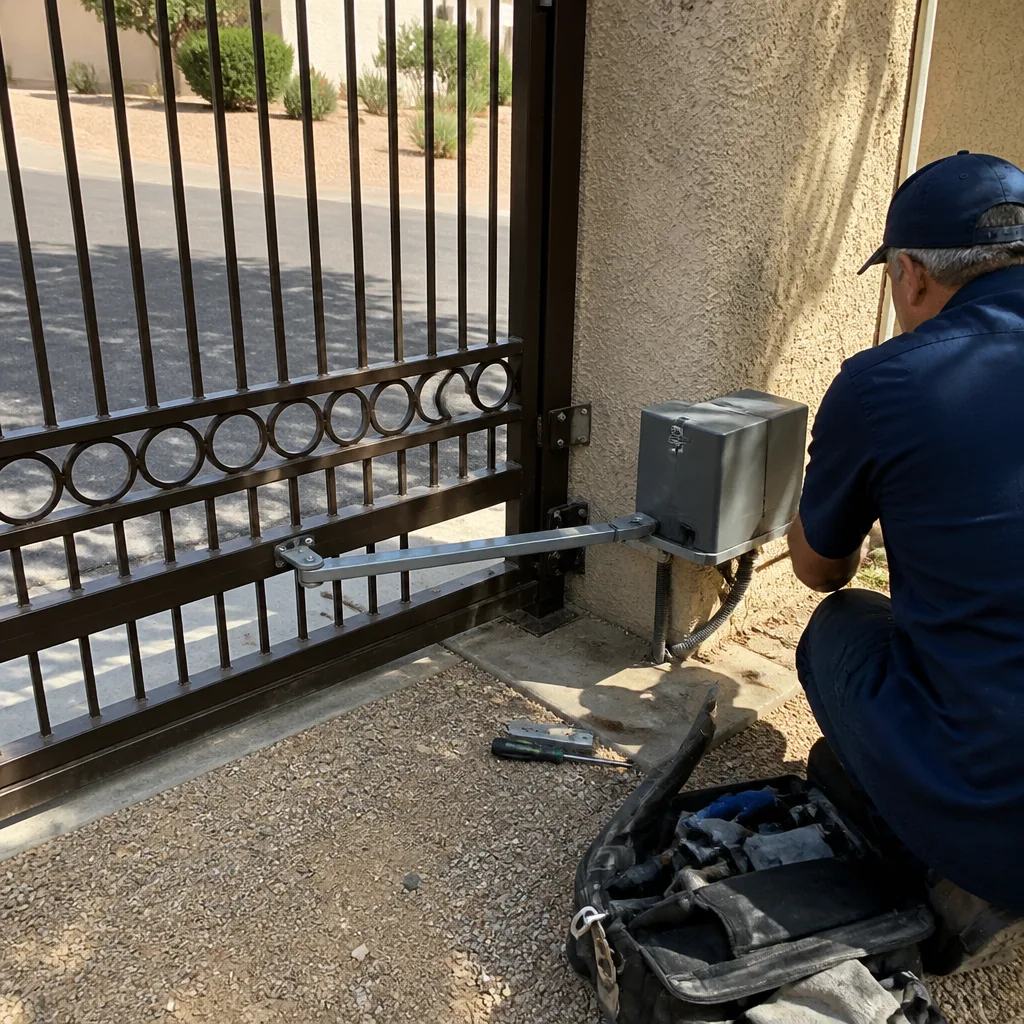 After
After